Sleep Hygiene: Practical Habits for Deeper Rest
Feeling tired but wired at bedtime? Explore realistic sleep hygiene habits that can help you wind down, support your body clock and create a more restful environment—without aiming for a perfect routine.
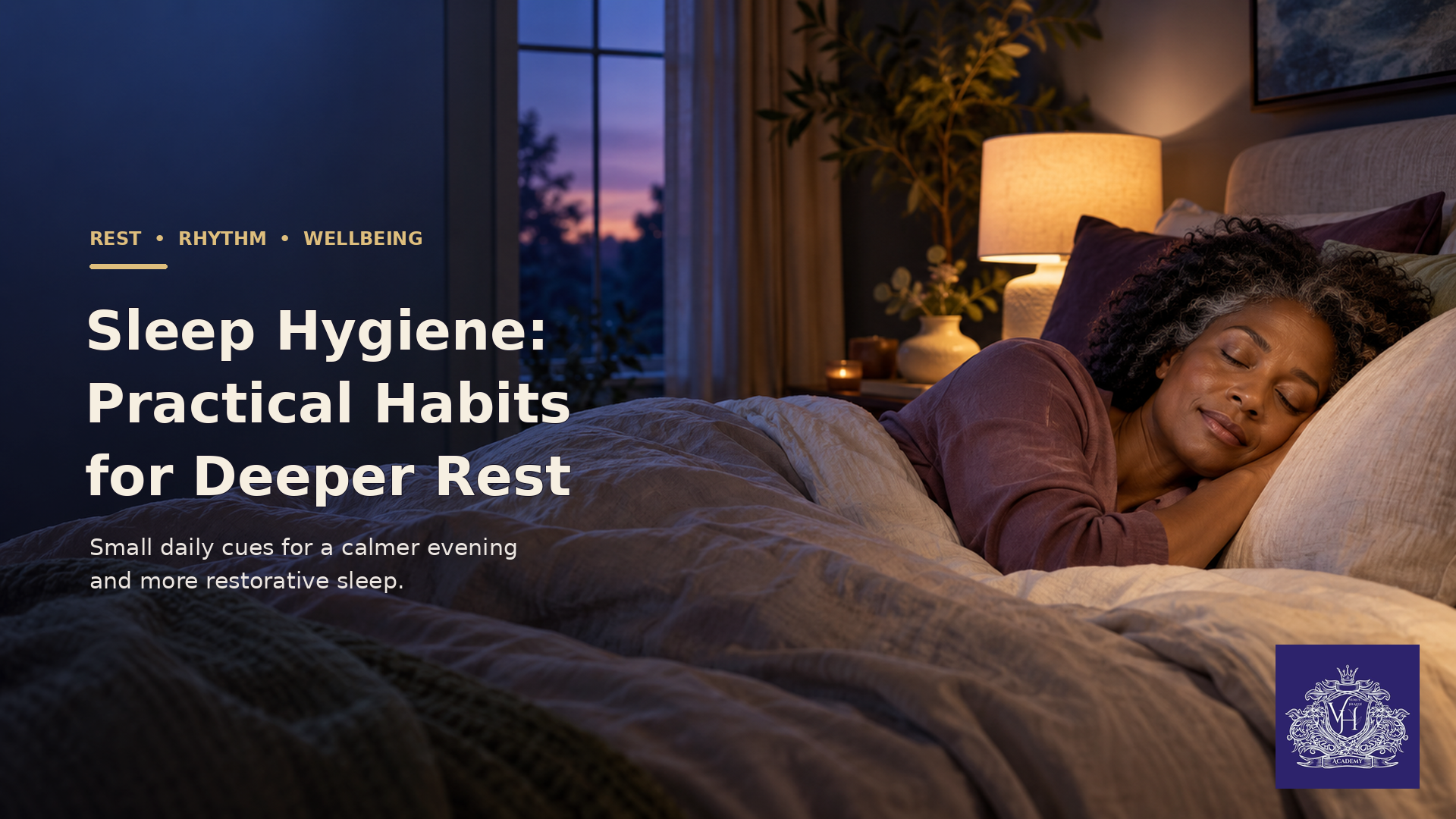
The tired-but-wired feeling at 10.30 pm is rarely solved by simply trying harder to sleep. You may have had a demanding day, eaten late, answered messages in bed, or carried tomorrow’s worries into the evening. Sleep hygiene is the collection of everyday cues and habits that helps your body recognise when it is safe to slow down, rest and repair.
For a holistic approach to wellbeing, sleep is not an isolated target. It is connected to nourishment, stress, movement, light exposure, relationships, hormones and the pace of your daily life. Better sleep hygiene is not about creating a flawless evening routine or judging yourself on difficult nights. It is about using practical tools consistently enough that your nervous system receives a clearer message: the day is ending.
What sleep hygiene really means
Sleep hygiene describes the conditions and routines that support good-quality sleep. That includes the obvious factors, such as a comfortable bedroom and a regular bedtime, but it also includes what happens from the moment you wake up. Morning daylight, caffeine timing, screen habits, meals, exercise and emotional load can all affect how easily you settle at night.
The goal is not necessarily eight hours for every person, every night. Sleep needs vary with age, health, activity levels, life stage and individual biology. Instead, look for signs that your sleep is serving you: you fall asleep without a long struggle most nights, wake reasonably refreshed, and have enough steady energy and concentration for your day.
A short night occasionally is part of life. Ongoing sleep disruption is different. If poor sleep lasts for weeks, affects your mood or ability to function, or comes with loud snoring, choking or gasping, persistent pain, restless legs or significant daytime sleepiness, seek advice from a qualified healthcare professional. Natural strategies can be supportive, but they should not delay assessment of a potential sleep disorder.
Build your sleep hygiene around your body clock
Your body clock responds strongly to regularity and light. A consistent wake-up time is often more useful than forcing an early bedtime after a poor night. Waking at a similar time each day helps anchor your circadian rhythm, making sleepiness more likely to arrive at a predictable time in the evening.
Try to get outside early in the day, even for ten minutes. Natural daylight helps signal alertness to the brain and supports the later release of melatonin, the hormone involved in sleep timing. A walk around the block, a cup of tea by an open window or a few minutes in the garden can be enough to begin. On darker days, outdoor light is still generally brighter than indoor lighting.
In the evening, gradually reduce bright light. You do not need to live by candlelight, but overhead lights, television and mobile phone screens can keep the brain in a more alert state when used intensely close to bed. Consider dimming lights an hour before sleep and keeping your mobile phone outside the bedroom if possible. If you use it as an alarm, place the mobile phone across the room rather than beside your pillow.
Create an evening landing routine
A useful routine does not need to be elaborate. It needs to be repeatable and calming enough to create a transition between responsibility and rest. For some people, that may be a warm shower, comfortable clothes and a novel. For others, it may be gentle stretching, a short meditation or preparing the next day’s breakfast.
Choose two or three actions you can realistically repeat. The point is not the activity itself but the association your body begins to make. When the same sequence happens regularly, it becomes a familiar cue that demands are easing.
It also helps to give your thoughts somewhere to go before your head meets the pillow. Keep a notebook nearby and write down unfinished tasks, worries or reminders for tomorrow. This is not about solving every concern at night. It is a way of reassuring yourself that the thought has been noticed and can wait until morning.
If you share a home or care for children, a perfectly quiet, uninterrupted routine may be unrealistic. In that case, focus on a small personal ritual that belongs to you: five slow breaths at the bathroom sink, a herbal tea after the household settles, or two pages of a book. Small practices still count.
Support sleep through food, drink and movement
Caffeine can remain active in the body longer than many people expect. If you struggle to fall asleep, experiment with moving coffee, energy drinks and strong tea earlier in the day. There is no universal cut-off, but stopping by early afternoon is a helpful starting point for many adults. Notice your own response rather than assuming an afternoon espresso has no effect because you can drink it without feeling jittery.
Alcohol can make you feel sleepy initially, yet it commonly disrupts the second half of the night and may reduce restorative sleep. If you drink, consider having it earlier, with food, and observing whether nights are more settled when you have alcohol-free evenings. This is information, not a rule to use against yourself.
Heavy meals very close to bedtime can feel uncomfortable, especially if you experience reflux. At the same time, going to bed genuinely hungry can make settling difficult. Aim for regular daytime meals and, if needed, choose a simple evening snack that feels satisfying rather than overly rich. Individual needs differ, particularly for people managing blood-sugar concerns, digestive symptoms or medication effects.
Movement supports sleep, partly by helping the body use stress energy during the day. Brisk walking, resistance training, swimming, gardening and yoga can all be beneficial. More intense exercise late in the evening is fine for some people but stimulating for others. Test the timing gently and let your sleep, rather than a rigid rule, guide you.
Make the bedroom work harder for rest
Your bedroom does not have to look like a wellness retreat to support sleep. It does need to feel physically comfortable and psychologically restful. A cool, dark, quiet space works well for many people. Blackout blinds, an eye mask, earplugs or a fan for gentle background sound can be practical options, especially in busy households or during bright summer mornings.
Check the basics too: bedding that suits the season, a pillow that supports your usual sleeping position, and nightwear that does not overheat you. These details can seem minor until they repeatedly wake you at 3 am.
Where possible, reserve the bed for sleep and intimacy rather than work, scrolling or stressful conversations. If your bed has become your office, start with one manageable boundary, such as charging devices in another room or moving work materials away before your evening routine begins. The aim is to rebuild a stronger mental link between bed and rest.
What to do when sleep will not come
Lying awake and monitoring the clock can make the nervous system more alert. If you have been awake for a while and feel increasingly frustrated, get up and do something quiet in low light. Read a calming book, listen to gentle audio or practise slow breathing until sleepiness returns. Avoid turning this into productive time. The purpose is to reduce the struggle, not to catch up on emails.
Be cautious with the urge to compensate after a bad night. A very long lie-in can make the next night harder, while a late, lengthy nap may reduce sleep pressure. A brief earlier-afternoon nap works for some people, but it depends on your schedule and how sensitive you are to daytime sleep. Returning to a familiar wake time is often the kindest reset.
A compassionate way to make change
Sleep hygiene works best as an experiment, not a perfection project. Choose one change for a week, perhaps morning daylight or a mobile-phone-free final half hour, and notice what shifts. Keep a simple record of bedtime, wake time, caffeine, alcohol, stress and how rested you feel. Patterns become easier to see when they are written down.
For practitioners and wellness professionals, this curiosity is also valuable when supporting clients. Rather than handing over a long list of rules, help people identify the barrier most relevant to their life: an irregular schedule, a racing mind, a noisy bedroom, late caffeine or a deeper health concern that needs assessment. Sustainable wellbeing grows from plans that fit real lives.
Within a supportive learning community such as Venus Health Academy, sleep can be explored as part of the wider picture of long-term vitality, emotional wellbeing and daily nourishment. The most effective next step is usually not dramatic. Tonight, choose one small cue of safety and rest, repeat it tomorrow, and allow your body time to learn the rhythm.