How to Identify Nutrient Deficiencies Safely
Persistent tiredness, brittle nails or restless sleep can have many causes. Learn how to track patterns, consider your diet and use testing and professional support to investigate possible nutrient deficiencies safely.
A persistent energy slump at 3 pm, brittle nails that never seem to improve, or restless sleep can make you wonder what your body is trying to say. Learning how to identify nutrient deficiencies is not about diagnosing yourself from one symptom or buying a cupboard full of supplements. It is about noticing patterns, understanding your food and lifestyle context, and using the right support to make informed choices.
Nutrients do not work in isolation. Stress can affect appetite and digestion; digestive issues can affect absorption; a restrictive diet can leave gaps even when it appears healthy. A whole-person approach helps you move beyond guesswork and towards practical, sustainable action.
Why symptoms alone are not enough
Many common symptoms linked with nutrient shortfalls are also linked with sleep, stress, hormonal shifts, medication, infection, thyroid concerns and other health conditions. Tiredness, for example, may occur with low iron, low vitamin B12, low vitamin D, poor sleep, low mood, dehydration or simply an overloaded routine.
This does not mean symptoms are irrelevant. They are useful clues, especially when they persist, cluster together, or began after a change in diet, health, medication or life circumstances. The key is to treat them as prompts for a wider investigation rather than proof of a particular deficiency.
For practitioners, this is a helpful reminder to avoid matching a symptom to a supplement too quickly. For individuals, it creates space to be curious without becoming anxious. Your body deserves attention, but it also deserves a careful interpretation.
How to identify nutrient deficiencies: start with patterns
Begin by observing what has changed and how long it has been happening. A simple health journal for two to four weeks can reveal more than memory alone. Note your energy, mood, sleep, digestion, skin, hair, appetite, menstrual cycle where relevant, and any symptoms that affect daily life. Record meals and drinks without judgement, along with exercise, stress and major changes to your routine.
Look for patterns rather than isolated bad days. Do symptoms worsen after certain meals? Did they begin when you became vegetarian or vegan, reduced calories, started intense training, experienced heavy periods, had digestive illness, or began a new medication? These details can help shape a more useful conversation with a GP, registered nutrition professional or suitably qualified practitioner.
Certain signs are commonly worth exploring, particularly when they are ongoing:
unusual fatigue, weakness, breathlessness or reduced exercise tolerance
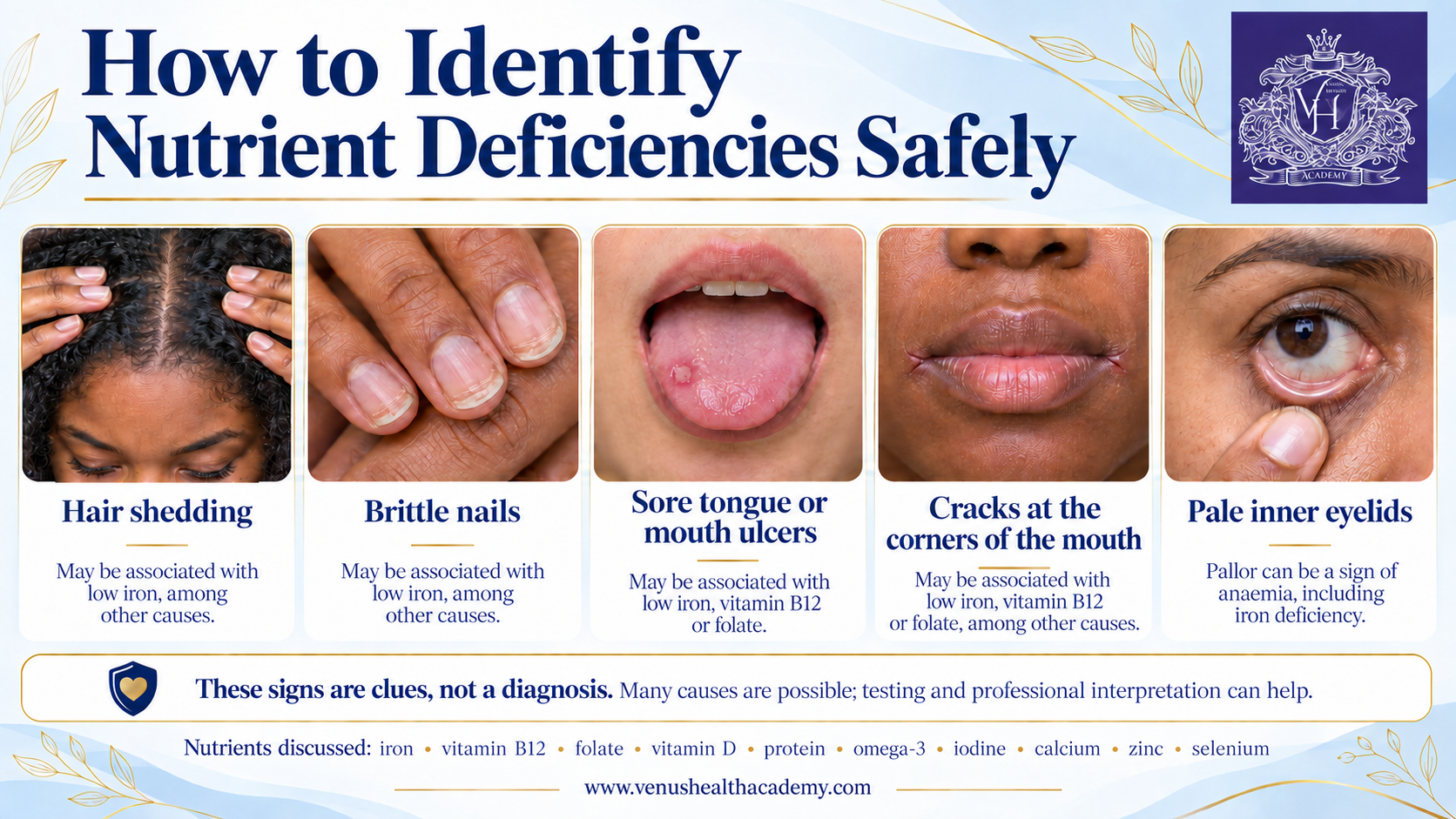
frequent mouth ulcers, a sore tongue, changes in taste, or cracks at the corners of the mouth
hair shedding, fragile nails, dry skin or slow wound healing
tingling, numbness, muscle cramps, bone discomfort or repeated infections
None of these signs identifies one nutrient with certainty. For instance, hair shedding may relate to iron status, thyroid function, stress, inadequate protein intake, recent illness or hormonal changes. Context is what gives a symptom meaning.
Consider your dietary pattern, not just ‘healthy eating’
A colourful plate is a strong foundation, but nutritional adequacy depends on variety, quantity, absorption and individual needs. Someone can eat plenty of vegetables yet fall short of protein, omega-3 fats, iodine, iron, calcium or vitamin B12. Equally, a person eating a conventional diet may have low vitamin D after months with little sunlight exposure.
Review a typical week, including weekends. Are you regularly eating protein-rich foods? Do meals include varied vegetables and fruit, wholegrains or other fibre-rich carbohydrates, and nourishing fats? Are there reliable sources of iron, zinc, calcium, iodine, selenium, vitamin B12 and omega-3 fats that suit your dietary preferences?
Some life stages and circumstances need extra care. Pregnancy, breastfeeding, adolescence, later life, heavy menstrual bleeding, endurance training, vegetarian and vegan eating patterns, coeliac disease, inflammatory bowel conditions, bariatric surgery and long-term digestive symptoms can all change nutrient requirements or absorption. This is not a reason to fear food. It is a reason to personalise your approach.
Know when testing can bring clarity
Blood testing can be valuable when symptoms, dietary history or health circumstances point to a possible shortfall. A clinician may assess iron markers, full blood count, vitamin B12, folate, vitamin D, thyroid function or other markers depending on your presentation. The most useful tests are chosen for a reason, then interpreted alongside symptoms, diet, medical history and medication use.
One result rarely tells the full story. Iron is a good example: a full blood count, ferritin and markers of inflammation may each add relevant context. Reference ranges also indicate population-based comparisons, not always an individual’s optimal wellbeing. That said, do not dismiss a result because it is technically within range, and do not assume every result near the lower end is the cause of your symptoms. A qualified professional can help you understand what the numbers may, and may not, mean.
At-home tests can be convenient, but quality and interpretation vary. If you use one, choose it thoughtfully and discuss concerning, unexpected or persistent findings with a healthcare professional. Testing should reduce uncertainty, not create a new source of worry.
Speak to your GP promptly when red flags are present
Seek medical advice promptly for severe or worsening fatigue, chest pain, fainting, unexplained weight loss, black or bloody stools, persistent vomiting, new neurological symptoms, significant shortness of breath or heavy bleeding. These symptoms need proper assessment and should not be managed with supplements alone.
It is also wise to seek guidance before supplementing if you are pregnant, breastfeeding, managing a medical condition, taking regular medication, or considering high doses. Nutrients can interact with medicines and, in excess, can cause harm. Iron, vitamin A, iodine, zinc and vitamin B6 are just a few examples where more is not automatically better.
Build a food-first plan while you investigate
Where appropriate, food is usually the most supportive place to begin. A food-first plan provides not only individual vitamins and minerals, but also protein, fibre, phytonutrients and the pleasure of regular, satisfying meals. It also gives your body time to show you how it responds to consistent nourishment.
Rather than changing everything at once, choose two or three practical shifts. You might add a protein source to breakfast, include a vitamin C-rich food with plant-based iron sources, plan oily fish or an alternative omega-3 source each week, or make a calcium-rich snack part of your routine. If digestive comfort is poor, the pace and form of dietary changes may need to be gentler.
Absorption matters too. Tea and coffee consumed with meals may reduce iron absorption for some people, while vitamin C can support absorption from plant sources of iron. A limited diet caused by nausea, sensory preferences, financial pressure or a busy schedule calls for compassion and realistic solutions, not perfect eating.
Supplements can have a place when a deficiency is confirmed, intake is consistently low, or a practitioner recommends one based on your circumstances. The dose, form and duration should match the reason you are taking it. Review the plan after an appropriate interval rather than allowing a short-term intervention to become an unexamined lifelong habit.
Use support to turn information into action
Nutritional health is easier to improve when you do not have to decipher every signal alone. Bring a clear record of symptoms, food patterns, supplements, medications and test results to an appointment. Ask what else might explain your symptoms, whether further testing is appropriate, which dietary changes are realistic, and when to review progress.
For wellness professionals, a respectful referral network is part of responsible client care. Education can help clients ask better questions and build supportive habits, while diagnosis and treatment of medical conditions remain within the remit of the appropriate healthcare professional.
At Venus Health Academy, we believe trusted natural health knowledge should leave you feeling more capable, not more overwhelmed. Give yourself permission to take one thoughtful next step: notice the pattern, nourish consistently, seek testing when it is warranted, and let qualified guidance help you build a plan that supports long-term vitality.