
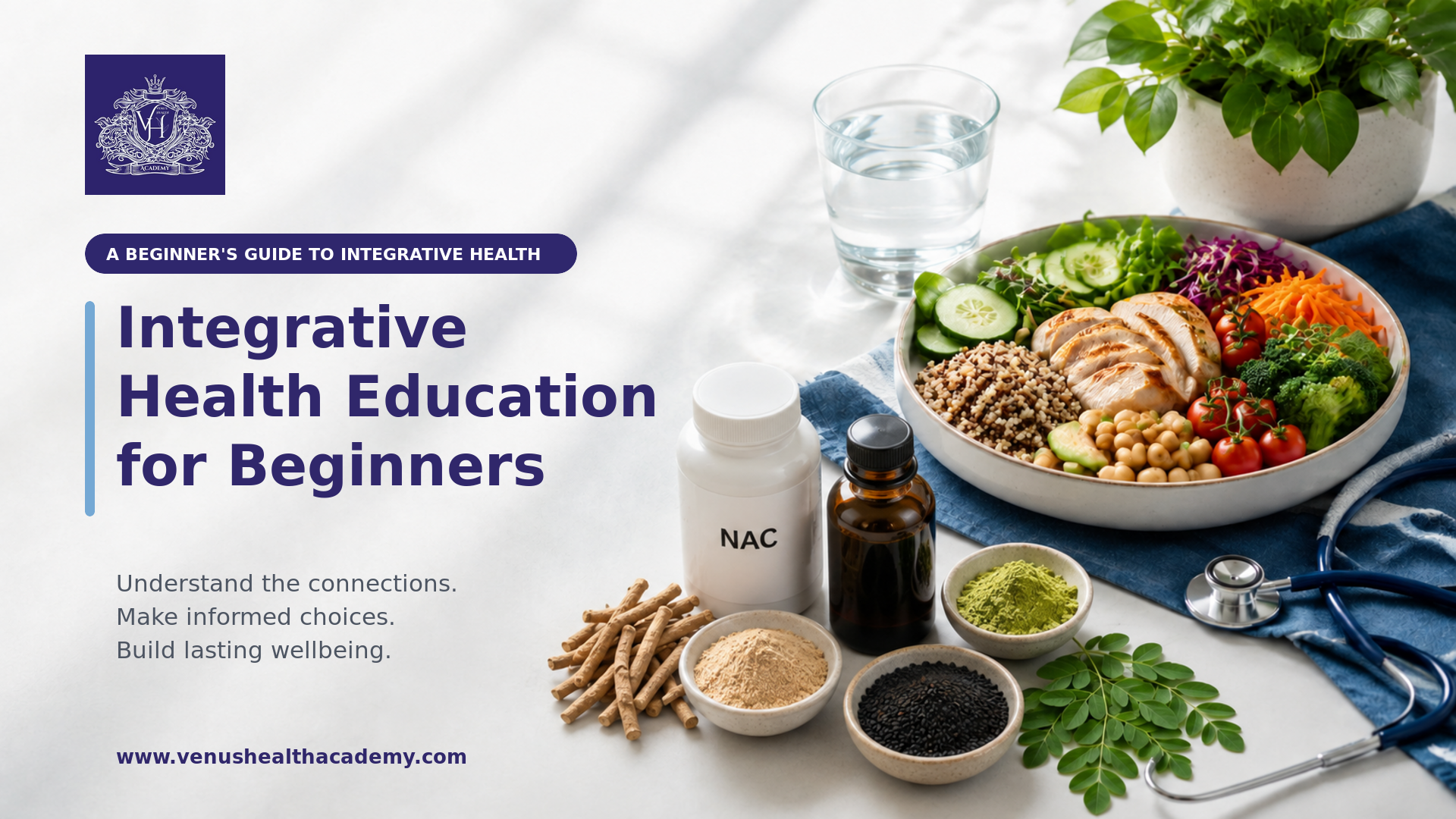
Integrative health education helps you understand how food, sleep, stress, movement and daily habits may influence your wellbeing. This beginner-friendly guide shows you how to notice patterns, ask better questions and make small, sustainable changes-without self-diagnosis, overwhelm or chasing quick fixes.
A persistent symptom can make you feel as though your body is working against you. You may have tried changing your diet for a week, bought a supplement recommended online, or been told that a test result is ‘normal’ when you still do not feel well. Integrative health education for beginners offers a steadier starting point: learning how the different parts of your health connect, so you can make informed choices rather than chase the next quick fix.
This is not about diagnosing yourself, rejecting conventional care, or attempting to perfect every meal and habit. It is about becoming a more confident partner in your own wellbeing. You learn to notice patterns, ask better questions and build supportive routines that fit real life.
What integrative health means in practice
Integrative health looks at the whole person. Physical symptoms matter, but so do sleep, food, movement, stress, relationships, emotional wellbeing, environment and daily routines. Rather than viewing each concern in isolation, it asks how these areas may influence one another.
For example, low energy is not automatically solved by another coffee or a single supplement. It may be connected to irregular meals, poor sleep quality, high stress, low iron, medication effects, an underlying health condition, or several factors at once. An integrative approach does not assume one cause. It creates space to investigate the wider picture with appropriate professional support.
This perspective can sit alongside medical treatment. A GP, pharmacist, registered dietitian, therapist or specialist may be an essential part of your care team. Natural approaches can be valuable, but ‘natural’ does not always mean safe for everyone. Herbs, restrictive diets and supplements can interact with medicines or be unsuitable during pregnancy, for particular conditions, or at certain doses.
Begin with curiosity, not a complete overhaul
The most common beginner mistake is changing everything at once. A strict food plan, early-morning workouts, a cupboard full of powders and a complicated tracking app may feel motivating for a few days. It is rarely sustainable, and it makes it difficult to know what is genuinely helping.
Start by observing your baseline for one or two weeks. Keep it simple. Notice when you eat, how you sleep, your energy through the day, digestion, mood, movement and anything that seems to worsen or ease your symptoms. This is not a test you can fail. It is useful information.
A short daily note is enough: ‘Skipped lunch, felt shaky at 4 pm, slept poorly after working late.’ Over time, this can reveal patterns that memory misses. It can also help you have a clearer conversation with a clinician or wellness practitioner.
Choose one supportive foundation
Your first change should be small enough to repeat on an ordinary, busy day. If you often feel drained by mid-afternoon, a balanced lunch with protein, fibre-rich carbohydrates and colourful vegetables may be more useful than relying on caffeine. If your evenings feel wired and restless, begin with a consistent wind-down cue, such as dimming lights and putting your phone away 30 minutes before bed.
The right first step depends on your starting point. Someone eating regular nourishing meals may benefit more from stress support than nutrition advice. Someone living with pain may need professional assessment and gentle pacing before adding exercise. Progress is personal, and it is rarely linear.
The core areas to learn about
A good beginner education programme gives you practical tools without overwhelming you. The aim is not to become an expert overnight, but to understand the foundations well enough to make thoughtful decisions.
Food as daily information and nourishment
Nutrition is often reduced to rules: avoid this, eat that, cut out an entire food group. Integrative learning takes a broader view. It helps you understand how regular meals, protein, fibre, hydration and food variety can support energy, digestion and mood.
You do not need a ‘perfect’ diet to begin. Try adding before removing. Add a vegetable to a familiar meal, include a protein source at breakfast, or prepare one simple recipe you can rely on during a demanding week. If you have a diagnosed condition, a history of disordered eating or complex digestive symptoms, individual guidance is especially important before making major dietary changes.
Sleep, stress and nervous system support
Sleep and stress are not optional extras in a wellbeing plan. They affect appetite, concentration, immune function, emotional resilience and the capacity to make changes. Yet advice such as ‘just relax’ is not helpful when life is full.
Instead, think in practical signals of safety and rest. A few minutes of slow breathing before a meeting, a brief walk outdoors, a regular bedtime, or a boundary around late-night emails can make a meaningful difference when practised consistently. These strategies do not replace mental health care where it is needed, but they can support your wider wellbeing.
Movement that meets you where you are
Movement is not a punishment for eating or a measure of worth. It can support strength, mobility, circulation, sleep and mood. For beginners, the most effective form is often the one you are willing and able to continue.
A ten-minute walk after lunch, gentle stretching between tasks or two weekly strength sessions can be a strong foundation. If movement causes chest pain, dizziness, severe breathlessness or a marked symptom flare, stop and seek medical advice rather than pushing through.
Understanding tests and symptoms responsibly
Health tests can offer useful clues, but a number on a report is not the whole story. Results need context: your symptoms, history, medicines, lifestyle, age and the reference range used by the laboratory. A result within range does not dismiss how you feel, and a result outside range does not always explain everything.
Learning to prepare questions for appointments is empowering. Ask what a result measures, whether it needs repeating, what possible factors may affect it, and what next steps are appropriate. Keep copies of your results and note changes over time. This helps you participate actively without taking on the burden of interpreting complex information alone.
How to spot trustworthy health education
The wellness space can be generous and inspiring, but it can also be confusing. Be cautious of anyone who promises to cure every condition, tells you to stop prescribed medication, creates fear around ordinary foods, or insists that one protocol suits everybody.
Trusted natural health knowledge makes room for nuance. It explains both potential benefits and limitations. It encourages you to speak with qualified professionals, especially when symptoms are new, severe, persistent or changing. It also recognises that cost, culture, access, disability and caring responsibilities shape what is realistic.
Look for education that helps you build skills: reading labels without anxiety, planning simple meals, asking useful questions, understanding basic health concepts and reflecting on your own patterns. A supportive global learning community can be particularly valuable here. You are more likely to stay with small changes when you can learn, ask questions and be encouraged without judgement.
Build a learning rhythm you can sustain
Treat integrative health as an ongoing practice rather than a 30-day challenge. Set aside a little time each week to learn one topic, try one practical tool and reflect on what happened. A recipe video might help you make weekday meals easier; a downloadable guide may give structure to your sleep routine; group coaching can help you work through the sticking points that generic advice overlooks.
At Venus Health Academy, this kind of learning is designed to be practical and supported, bringing courses, protocols, wellbeing resources and community guidance into one place. Whether you are beginning your personal health journey or strengthening the way you support clients, the value lies in applying knowledge gently and consistently.
Keep your focus on what helps you feel more capable, not more controlled. Ask yourself: what is one change that would make tomorrow slightly easier? Then give that change enough time to become part of your life. Long-term vitality is often built in those quiet, repeatable choices.