10 African Foods That May Fight Cancer Risk
Can African foods help reduce cancer risk? Discover how cowpeas, leafy greens, sorghum, baobab and other traditional foods can contribute to a varied, fibre-rich eating pattern. Food does not replace screening or medical care.
A bowl of cowpeas, a spoonful of baobab powder or a pot of leafy greens will not cure cancer. Yet these foods can be meaningful parts of an eating pattern that supports the body over time. When people search for 10 African foods that fight cancer, what they often need is clear, grounded guidance: foods can help lower certain cancer risks, but they never replace screening, diagnosis or medical treatment.
Across a vast and varied continent, traditional food cultures have long centred beans, whole grains, vegetables, herbs and naturally colourful fruits. These foods bring fibre, vitamins, minerals and plant compounds that may help protect cells, support gut health and reduce chronic inflammation. The greatest benefit comes from consistent meals, not a single superfood.
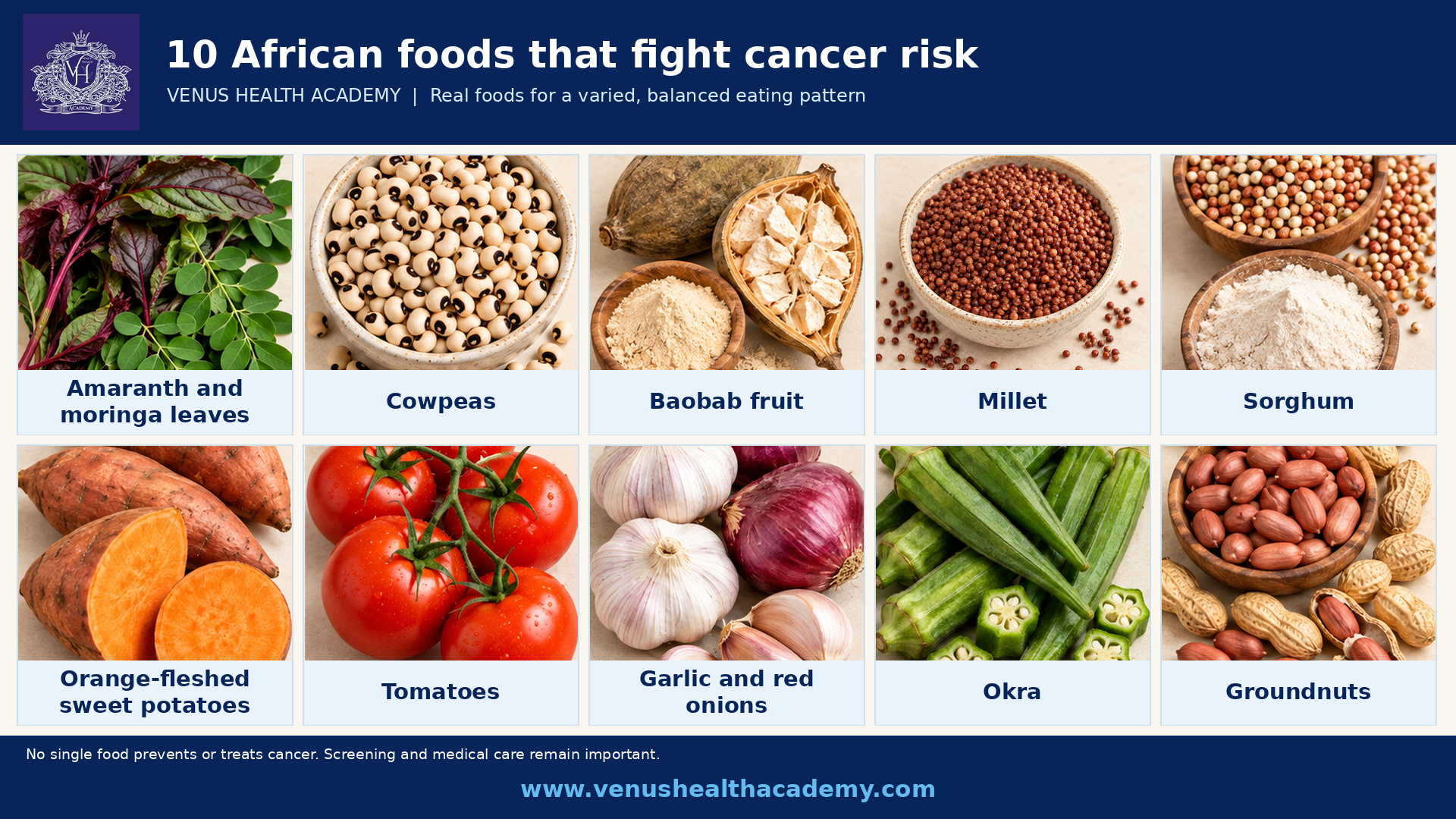
10 African foods that fight cancer risk
1. Amaranth, moringa and other dark leafy greens
Leafy greens are everyday nourishment in many African kitchens. Amaranth leaves, moringa leaves, bitter leaf and pumpkin leaves offer folate, carotenoids, vitamin C and a range of protective plant compounds. Dark green leaves also support a fibre-rich diet, which matters because healthy bowel function and a diverse gut microbiome are linked with lower colorectal cancer risk.
Cook leaves gently in stews, soups or bean dishes. If using moringa powder, treat it as an addition rather than a replacement for whole vegetables. A teaspoon in porridge, a smoothie or a soup can be practical, but fresh and cooked greens bring volume and fibre that powders cannot fully provide.
2. Cowpeas and black-eyed beans
Cowpeas are affordable, filling and deeply nourishing. Like other pulses, they provide plant protein, resistant starch and soluble fibre. These fibres feed beneficial gut bacteria, which produce compounds that help maintain the gut lining and support metabolic health.
Try cowpeas in a tomato-based stew, mashed into patties, or added to a grain bowl with greens and a bright lemon dressing. If beans are new to your routine, begin with smaller portions and increase gradually. Soaking dried beans and cooking them thoroughly can make them easier to digest.
3. Bambara groundnuts
Bambara groundnuts are a traditional African legume with a valuable balance of protein, fibre and minerals. Their slow-digesting carbohydrate profile can support steadier energy than refined snacks, especially when paired with vegetables and healthy fats.
Cancer prevention is not only about isolated nutrients. It is also about building eating habits that support a healthy weight, blood sugar balance and regular digestion. Use Bambara groundnuts in soups, porridges or savoury stews, much as you would use chickpeas or lentils.
4. Sorghum
Sorghum is a naturally gluten-free whole grain used in porridges, flatbreads and fermented foods. Its darker varieties contain polyphenols, including antioxidant compounds that are being studied for their potential role in cell protection. Research on these compounds is promising, but it does not mean sorghum is a cancer treatment.
The practical takeaway is simpler: swap some refined white flour or highly processed cereals for minimally processed grains. Sorghum porridge with berries, nuts and yoghurt makes a nourishing breakfast, while cooked sorghum can add texture to salads and soups.
5. Teff
Teff is a tiny grain best known for its role in Ethiopian and Eritrean cooking. It provides fibre, iron, magnesium and protein, and its small size means it is usually eaten as a whole grain rather than stripped of its bran and germ.
Whole grains are consistently associated with better digestive health and a lower risk of colorectal cancer when they replace refined grains in an overall balanced diet. Enjoy teff as a warm breakfast porridge, in grain salads, or through traditional fermented flatbreads where available. Portion and preparation still matter, especially for anyone managing blood sugar concerns.
6. Orange-fleshed sweet potatoes
Orange-fleshed sweet potatoes get their colour from beta-carotene, a pigment the body can convert into vitamin A. Their fibre and naturally sweet flavour make them a satisfying alternative to heavily processed carbohydrates.
Roast them with olive oil and spices, fold them into a bean stew, or serve them alongside leafy greens. Keep the skin on when appropriate and well washed, as this adds extra fibre. Their value lies in their place within a colourful plate, not in eating large amounts of one food.
7. Okra
Okra offers fibre, vitamin C, folate and a gentle way to add more vegetables to meals. Its characteristic texture comes from soluble fibre, which can help create satisfying dishes and support healthy cholesterol levels as part of a wider eating pattern.
Add okra to soups, curries and tomato stews, or roast it at a high heat for a less slippery texture. For people who find vegetable intake difficult, okra is a useful starting point because it works well with familiar flavours such as garlic, onions, tomatoes and chilli.
8. Tomatoes and red peppers
Tomatoes and red peppers are now staples in many African cuisines, even though their origins lie elsewhere. They earn a place here because sauces, relishes and stews made from them are such accessible vehicles for protective nutrients. Tomatoes contain lycopene, while peppers contribute vitamin C and carotenoids.
Cooking tomatoes with a little oil can help the body absorb lycopene. Think of a slow-cooked tomato and pepper base for beans, fish or vegetables. Choose celtic sea-salt (or other natural sea salt) ingredients where possible, particularly if you are using tinned tomatoes or stock cubes regularly.
9. Baobab fruit
Baobab fruit has a tangy flavour and contains vitamin C, fibre and polyphenols. It can be stirred into yoghurt, porridge or water, and is often used in powdered form outside African growing regions.
It is easy to overstate what a fashionable powder can do. Baobab can be a lovely addition to a varied diet, but it is not superior to eating a wide range of fruit and vegetables. If you use it, choose a product without added sugar and let it complement, rather than complicate, your routine.
10. Hibiscus
Hibiscus, often prepared as a ruby-red drink, contains anthocyanins and other antioxidant plant compounds. Unsweetened hibiscus tea can be a refreshing alternative to sugary fizzy drinks, which is one practical way it may support long-term health.
Brew it cold or hot with ginger, citrus peel or fresh mint, and taste before adding sweetener. Hibiscus may affect blood pressure or interact with some medicines, so speak with a pharmacist or clinician if you take regular medication, are pregnant, or are managing a health condition.
Make the pattern work in real life
Rather than trying to eat all ten foods in one week, choose two or three that fit your budget, culture and cooking confidence. A simple rhythm might be beans twice a week, leafy greens most days, a whole grain in place of a refined one, and a colourful vegetable at lunch and supper. This is where prevention becomes practical rather than overwhelming.
Food is one part of a whole-person approach. Movement, sleep, stress support, alcohol intake, smoking status, body weight, environmental exposures and access to screening all influence cancer risk. Genetics and chance also play a role, which is why self-blame has no place in preventive health.
If you have cancer, unexplained symptoms, a strong family history, or concerns about a screening result, seek personalised advice from your medical team. Natural health knowledge is most empowering when it helps you make informed choices alongside appropriate care.
Let your next meal be an act of steady support: a colourful plate, a familiar recipe, and one realistic choice you can repeat with confidence.