
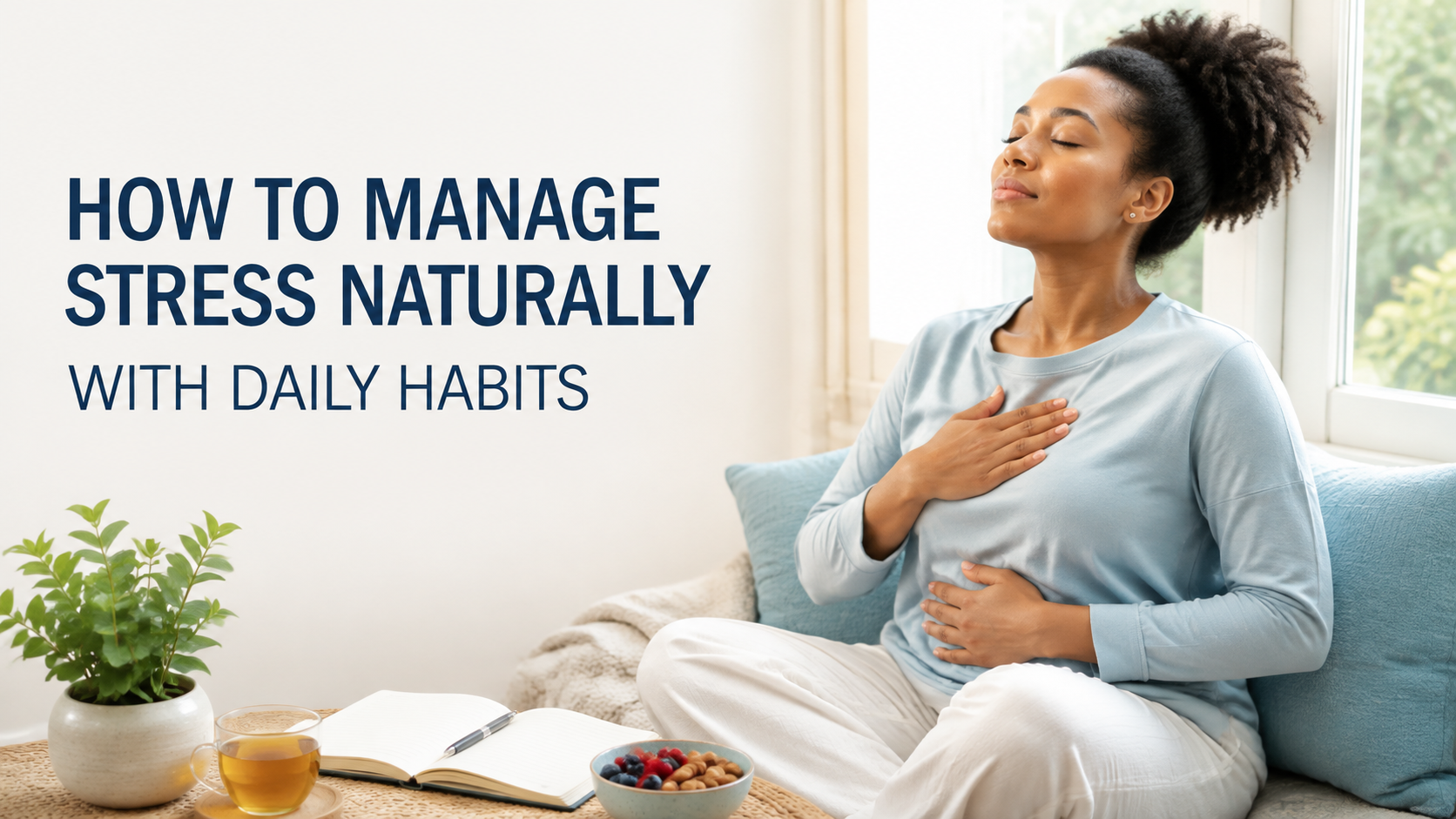
Stress can appear as restless sleep, muscle tension, cravings, low energy or a constant sense of urgency. Discover practical daily habits, from balanced meals and gentle movement to breathing, boundaries and emotional support, that can help your nervous system recover and build resilience naturally.
The day can look perfectly manageable on paper, yet your body may tell a different story: a tight chest before opening your inbox, restless sleep, cravings for quick energy, or the feeling that even small decisions require too much effort. Learning how to manage stress naturally begins by taking those signals seriously. Stress is not a personal failure or something to push through indefinitely. It is information from a system asking for safety, rest, nourishment or support.
Natural stress care is not about creating a flawless routine or eliminating every pressure from life. It is about building practical tools that help your nervous system recover more often, so challenges do not take quite as much from you. For some people, the most helpful starting point is sleep. For others, it is stabilising meals, setting one clear boundary, or talking honestly with someone they trust.
How to manage stress naturally by working with your body
Stress is a whole-body experience. When your brain detects threat, whether it is a genuine emergency, financial worry, conflict, illness or an overloaded diary, it prepares you to act. Your heart rate may rise, digestion can slow, muscles tense and thoughts become more urgent. This response is useful in short bursts. The difficulty comes when it rarely switches off.
A natural approach looks beyond the immediate symptom. Rather than asking only, “How can I feel less stressed right now?”, ask, “What is keeping my system on alert?” The answer may involve work demands, under-eating, poor sleep, unresolved grief, too much caffeine, chronic pain, hormone changes, loneliness or a combination of factors.
This root-cause perspective is not about blaming yourself for your stress. It gives you more choices. You may not be able to remove every source of pressure, but you can create small moments of recovery that signal to your body: you are safe enough to soften.
Start with a realistic stress check-in
Before adding another wellness task, pause and notice patterns for a week. When does tension peak? What happens beforehand? How do you sleep, eat and feel in your body on those days? A few notes on your mobile phone or in a journal can reveal useful connections.
For example, an afternoon slump and irritability may follow a rushed breakfast and several coffees. Sunday-night anxiety may point to a workload or boundary that needs attention, rather than a need for another supplement. A practitioner can use these observations to support a client more thoughtfully, while individuals can use them to make informed choices without trying everything at once.
Give your nervous system regular signals of safety
Your nervous system responds best to repetition, not intensity. A single spa day may feel lovely, but brief daily practices are often more effective for building resilience over time. Choose one or two that feel possible even on a demanding day.
Slow breathing is one accessible option. Try breathing in gently, then making the out-breath a little longer than the in-breath for one or two minutes. There is no need to force deep breaths. The aim is comfort and a slower rhythm, which can help reduce the sense of urgency in the body.
Gentle movement is equally valuable. A ten-minute walk outdoors, light stretching between meetings, gardening, dancing in the kitchen or a calm yoga practice can release physical tension and shift your attention out of racing thoughts. If intense exercise leaves you wired, exhausted or unable to sleep, a lower-intensity form of movement may suit your current stress load better.
Sensory cues can help too. Step outside for daylight in the morning, hold a warm drink without scrolling, listen to music that settles you, or place your feet firmly on the floor while noticing five things you can see. These are simple practices, but they interrupt autopilot and bring you back into the present.
Support stress resilience with everyday foundations
Stress-management advice can become overwhelming when it focuses on doing more. Start with the foundations that make the biggest difference to how stable and resourced you feel.
Eat for steadier energy
Going long periods without food can make stress symptoms feel louder. Shakiness, headaches, low mood and difficulty concentrating are not always caused by stress alone, but unstable energy can make coping harder. Aim for regular meals that include protein, fibre-rich carbohydrates and healthy fats.
A breakfast of eggs with vegetables and toast, porridge with yoghurt, nuts and berries, or beans on wholegrain toast can offer more lasting energy than a pastry and coffee alone. You do not need dietary perfection. The goal is to reduce the peaks and crashes that leave your body feeling as though it needs to stay on high alert.
Caffeine deserves an honest review. Some people tolerate it well; others notice that coffee on an empty stomach, late-afternoon tea or energy drinks increase palpitations and anxious thoughts. Experiment with reducing the amount, drinking it after food, or choosing a caffeine-free alternative for a fortnight. Notice your own response rather than following a rigid rule.
Protect sleep without chasing it
Poor sleep and stress easily reinforce one another. You cannot always control how quickly you fall asleep, but you can make rest more likely. Keep a broadly consistent wake time, get daylight early in the day, and create a gentler final hour before bed when possible.
That may mean moving your mobile phone out of reach, dimming lights, having a warm shower, reading something undemanding or writing tomorrow’s tasks down so they do not keep circling in your mind. If you wake at night, try not to turn sleep into a performance. A quiet rest practice is still restorative, and pressure to sleep can keep the nervous system activated.
Create breathing room in your calendar
A packed diary can make every healthy habit feel impossible. Look for one recurring pressure point rather than attempting to overhaul your life. Could you protect a lunch break twice a week, put a realistic finish time on work, decline a non-essential commitment, or leave ten minutes between appointments?
Boundaries are a health practice, not an act of selfishness. They also show children, colleagues and clients what sustainable care can look like. If saying no feels difficult, begin with a pause: “Let me check my capacity and come back to you.” That small gap gives you space to respond rather than react.
Make room for emotions, connection and support
Natural stress care is not only food, movement and sleep. Emotions that are dismissed or continually managed alone often find a way to show up in the body. Naming what is true can reduce its intensity: “I am overwhelmed,” “I am grieving,” or “I am worried about money.” This is not dwelling on a problem. It is meeting yourself with clarity.
Journalling, prayer, creative work or speaking with a trusted friend can provide a safe outlet. Community matters because stress often persuades us to withdraw precisely when support would help. A supportive group, coach or wellbeing community can offer accountability, practical ideas and the reminder that you do not have to figure everything out alone.
At Venus Health Academy, guided education and shared learning can help turn broad wellbeing intentions into practical routines. The most useful plan is usually the one you can return to on an ordinary Tuesday, not just during a motivated weekend.
When natural approaches need extra support
Lifestyle tools can be deeply supportive, but they are not a substitute for appropriate medical or mental health care. Speak with a GP or qualified mental health professional if stress feels unmanageable, persists for weeks, affects your ability to function, or comes with panic attacks, depression, trauma symptoms, substance reliance or thoughts of harming yourself. Seek urgent help immediately if you are at risk of harm.
It is also wise to get new or concerning physical symptoms assessed, including chest pain, significant palpitations, unexplained weight changes or severe fatigue. Stress may be part of the picture, but it should not be used to explain away everything. If you are considering herbs or supplements, especially alongside medication, during pregnancy or with a health condition, seek personalised advice from a suitably qualified practitioner.
Choose one practice today that makes your next hour feel slightly safer: eat a proper meal, step outside, send the message you have been avoiding, or take three slower breaths. Small acts of care are not insignificant. Repeated with patience, they become evidence that your wellbeing has a place in your life.