The Forgotten Healer: Cholesterol's Essential Role in Repairing the Human Body
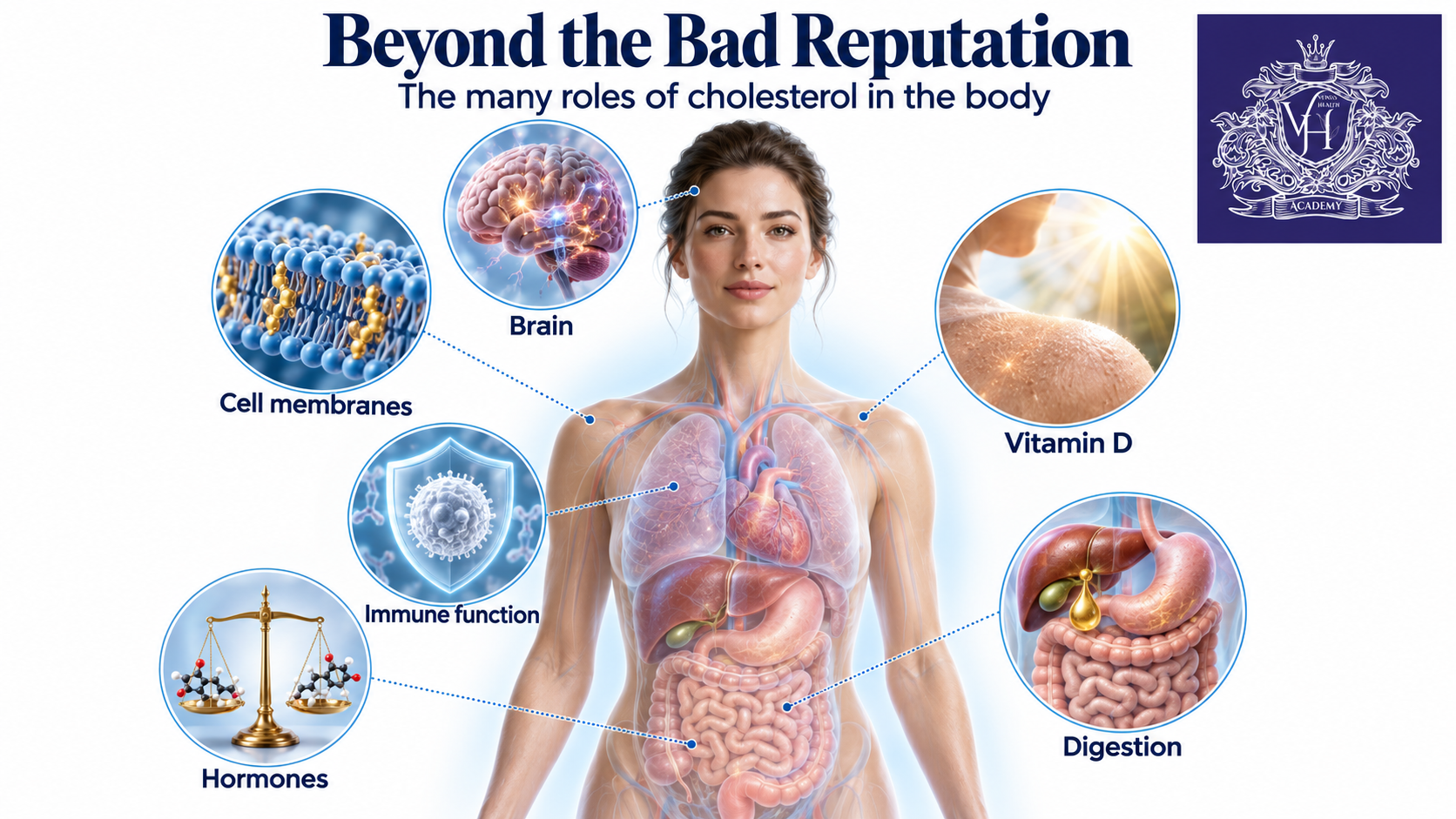
Cholesterol is often cast as the villain of cardiovascular health, but its story is far more complex. In this article, we explore the science behind cholesterol's essential role in the body's repair mechanisms, from sealing damaged cell membranes and regenerating skin to rebuilding the myelin sheath that protects our nerves. Drawing on recent research, we reveal why balanced cholesterol levels matter for healing, and what this means for your overall wellbeing.
When most people hear "cholesterol," they think of heart disease, statins, and stern warnings from their doctor. But beneath the surface of this controversial molecule lies a story that rarely gets told: cholesterol is not just a passive passenger in your bloodstream. It is an active, essential participant in your body's repair and healing processes, from sealing a torn cell membrane to rebuilding damaged nerves and regenerating skin.
At Venus Health Academy, we have always believed that understanding the full picture of any molecule, not just its risks, empowers you to make better decisions for your health. Today, we are exploring the often-overlooked reparative roles of cholesterol, drawing from recent scientific research that reveals why this ancient lipid is far more than a cardiovascular villain.
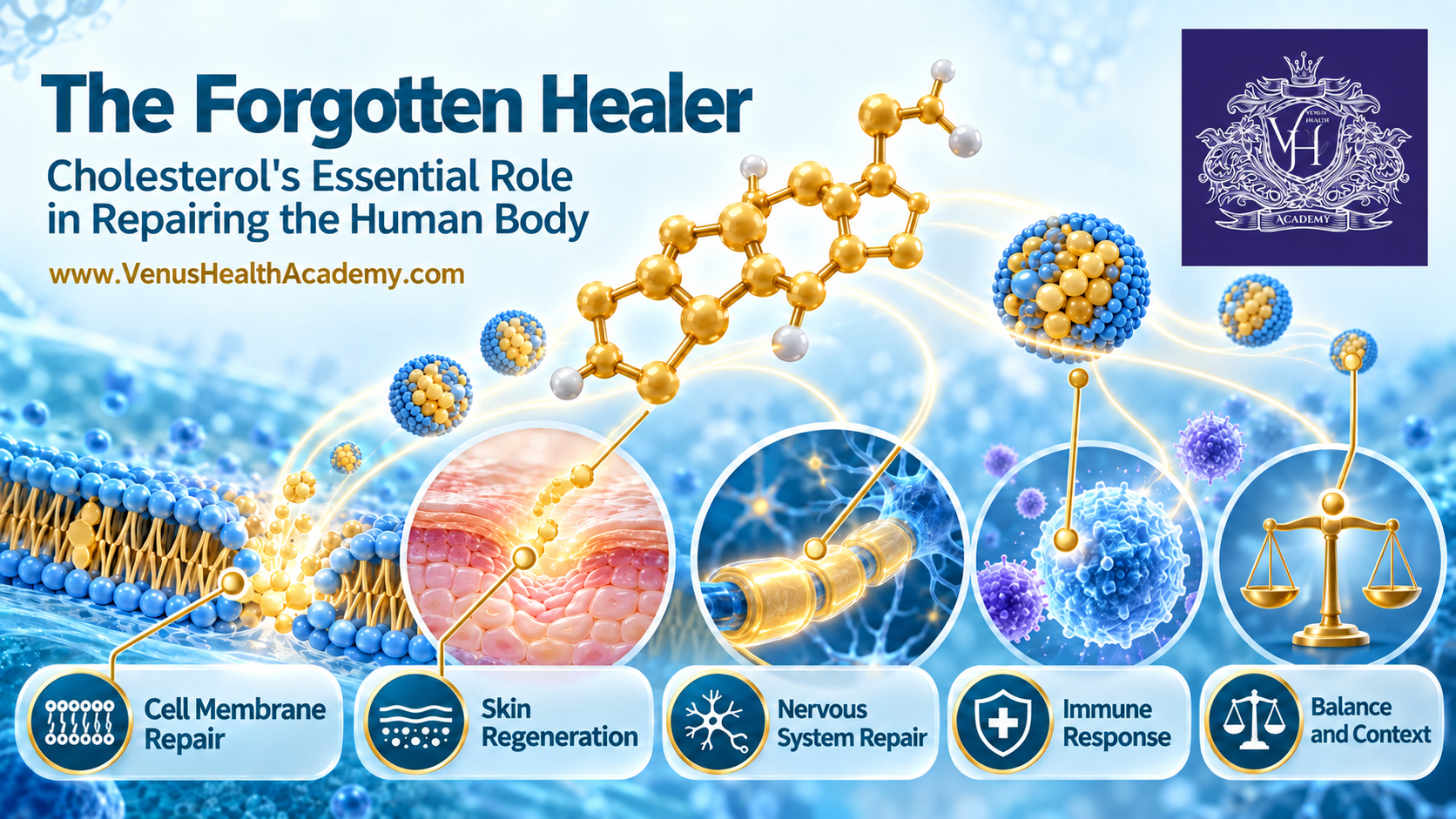
The Cell Membrane: Your Body's First Line of Defence
Every cell in your body is wrapped in a membrane that must be both flexible and resilient. Cholesterol is a structural cornerstone of that membrane, regulating its fluidity and stability. But its role goes far beyond passive structure.
When a cell membrane is torn or punctured, whether from mechanical injury, infection, or everyday wear and tear, your body initiates a rapid repair response. Research has shown that cholesterol is directly involved in this process. A protein complex called MG53, which accumulates at injury sites to patch damaged membranes, requires cholesterol to anchor itself properly. Without sufficient membrane cholesterol, this repair machinery cannot function effectively. Molecular simulations confirm that cholesterol modulates the membrane curvature necessary for annexins, another family of repair proteins, to reseal wounds in the plasma membrane.
In other words, cholesterol is not merely present during membrane repair; it is an active coordinator of the process.
Skin Regeneration: Cholesterol as a Wound-Healing Ally
Your skin is a high-turnover organ that constantly repairs itself. The outermost layer, the stratum corneum, relies on cholesterol as an essential component to maintain its barrier function, preventing moisture loss and protecting against external irritants.
Recent research has explored whether cholesterol could be harnessed therapeutically for wound healing. A 2024 study investigated the effects of cholesterol on keratinocytes, the predominant cell type in the epidermis. The findings were striking: at an optimal concentration (0.7 mM), cholesterol significantly enhanced keratinocyte proliferation, with over 30% higher cell numbers compared to controls after one week. Higher concentrations were detrimental, suggesting a delicate balance is required.
The researchers also developed cholesterol-enriched scaffolds that delivered the molecule directly to cells in a controlled manner. These scaffolds promoted cell growth and influenced differentiation, pointing towards potential applications in advanced wound dressings and regenerative therapies for burns, diabetic ulcers, and other slow-healing wounds.
This research adds to our previous discussions about the importance of balanced cholesterol levels, not too high, not too low, for optimal physiological function.
Nervous System Repair: Cholesterol and Myelin Regeneration
Perhaps the most dramatic example of cholesterol's reparative role lies in the nervous system. The myelin sheath, the fatty insulation that wraps around nerve fibres, is approximately 70 to 80% lipid, with cholesterol being a major component.
When myelin is damaged, as occurs in multiple sclerosis and other demyelinating conditions, the body attempts to repair it through a process called remyelination. A 2025 study examined the biophysical properties of repaired myelin and made a critical discovery: remyelinated membranes had reduced cholesterol content compared to healthy myelin, and this reduction directly impaired the membrane's stability and packing density.
Remarkably, when researchers supplemented the repaired myelin with additional cholesterol, the membrane's biophysical properties improved dramatically. The study concluded that "high cholesterol levels are required for myelin membrane stability" and that reduced cholesterol in repaired myelin may have profound functional consequences.
This finding aligns with earlier research showing that regenerating nerves depend on exogenous cholesterol sources, particularly lipoproteins, to support axonal growth and repair. The body appears to prioritise cholesterol delivery to injured nerves, underscoring its importance in neural recovery.
The Immune Response: Cholesterol as an Immunometabolic Regulator
Healing and repair cannot occur without a properly regulated immune response. Here too, cholesterol plays a central role. Cholesterol accumulates in immune cells during activation, supporting inflammatory signalling that is beneficial in fighting infections but can become problematic in chronic inflammatory conditions.
This dual nature reflects a recurring theme in cholesterol biology: the same molecule that supports healing in acute injury can contribute to disease when regulation fails. The key, as always, lies in balance and context.
What This Means for You
The research we have explored here does not suggest that "more cholesterol is better." Rather, it reveals that cholesterol is essential for your body's repair mechanisms, and that both deficiency and excess can impair healing.
If you are taking cholesterol-lowering medication, it is worth having a conversation with your healthcare provider about the broader picture, including how your body's repair systems might be affected. And if you are focused on wound healing, recovery from injury, or neurological health, ensuring your body has the cholesterol it needs to do its job is a consideration that deserves attention.
At Venus Health Academy, we will continue to bring you balanced, evidence-based perspectives on the molecules that shape your health. Cholesterol is not a villain. It is a complex, multifaceted player in your body's remarkable capacity to heal itself.
Have questions about cholesterol and healing? Explore our previous articles on lipid metabolism and cardiovascular health for more context, and stay tuned for our next deep dive into the science of wellness.
Cardioprotection of Ischemia/Reperfusion Injury by Cholesterol-Dependent MG53-Mediated Membrane Repair
www.pubmed.ncbi.nlm.nih.gov/20466981/
Reduced cholesterol alters the biophysical properties of repaired myelin
www.pmc.ncbi.nlm.nih.gov/articles/PMC12414613/
Role of Lipoproteins in the Delivery of Lipids to Axons during Axonal Regeneration
www.sciencedirect.com/science/article/pii/S0021925819896096
NUCB2/Nesfatin-1 Couples Cholesterol Biosynthesis to Keratinocyte Migration to Accelerate Re-Epithelialisation in Cutaneous Wound Repair
www.onlinelibrary.wiley.com/doi/10.1111/wrr.70210
Lipid metabolism in homeostasis and disease
www.nature.com/articles/s41392-025-02357-x
Uptake of Lipoproteins for Axonal Growth of Sympathetic Neurons
www.jbc.org/article/S0021925819800649/pdf