
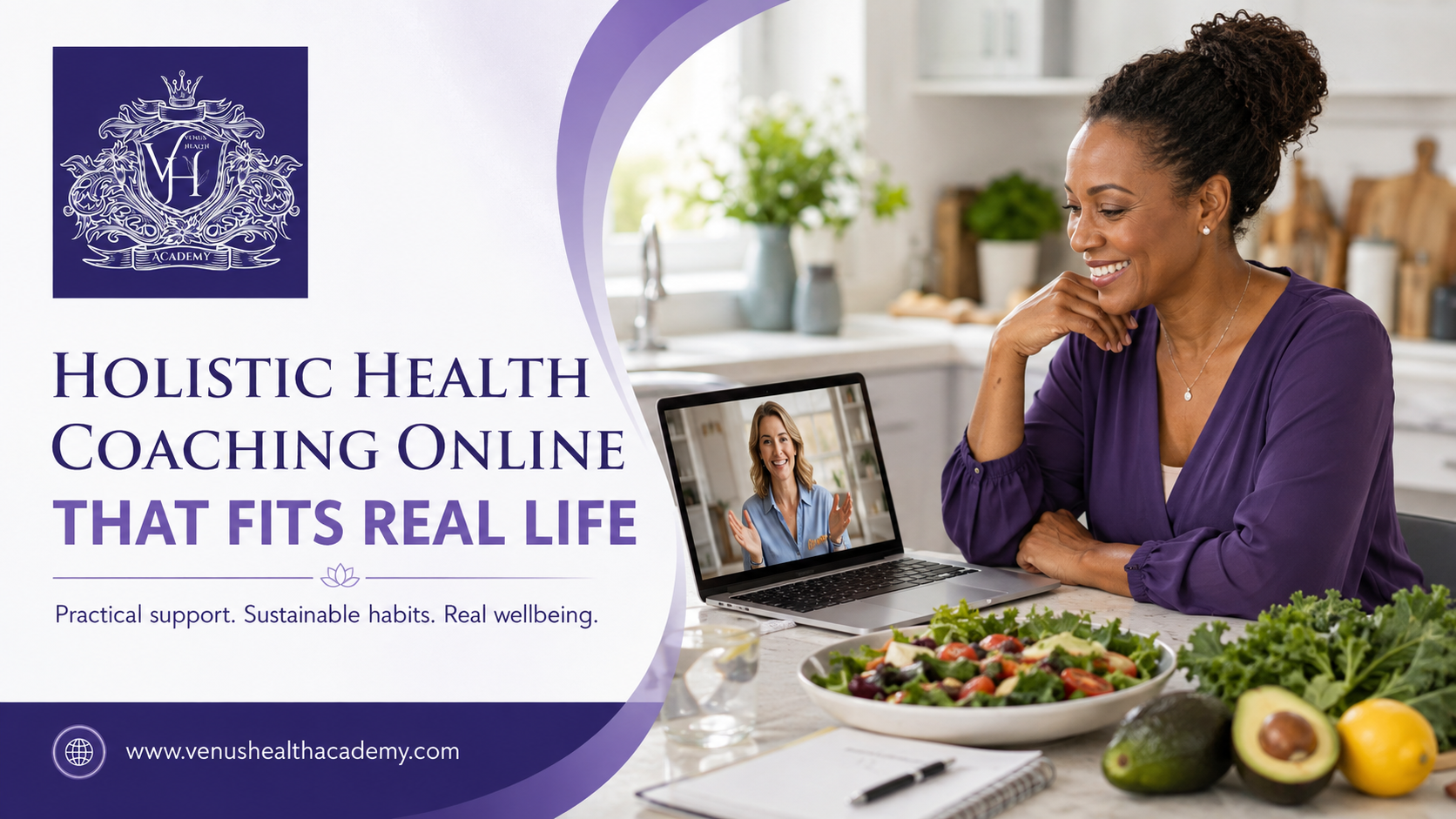
Explore how online holistic health coaching supports lasting wellbeing through practical nutrition, sustainable habits, stress management and a supportive community. Discover a flexible, whole-person approach designed to fit your real life.
A food shop can feel like a test when you are tired, managing symptoms, reading conflicting advice and trying to make a decision that supports your health. Holistic health coaching online can make that moment less overwhelming. Rather than handing you another rigid plan, it gives you a place to understand the patterns behind your choices, ask better questions and build practical habits that can hold up in real life.
For some people, that means finally creating regular meals after years of skipping them. For others, it means learning how sleep, stress, movement, digestion, relationships and nutrition can affect one another. For wellness professionals, it can mean gaining clearer tools and language to support clients without reducing their experience to a single symptom.
What holistic health coaching online can offer
Holistic health coaching looks at the whole person. It recognises that wellbeing is shaped by daily routines, emotional health, food, rest, environment, beliefs and the support available around you. The aim is not to promise a quick fix or replace medical care. It is to help you make informed choices, develop sustainable routines and take an active role in your health.
Online delivery makes that support more accessible. You can learn from home, revisit a recorded lesson after a busy week, join a group session from another part of the country, or use a downloadable guide while planning meals. This matters because lifestyle change rarely happens in one appointment. It is usually built through small decisions, repeated with patience.
A thoughtful online coaching experience may combine education with accountability. You might explore the foundations of balanced eating, understand how to read common health information, reflect on stress patterns, try simple meal ideas and return to the community with questions. The right programme does not ask you to become perfect. It helps you notice what is realistic and useful for your circumstances.
Why education matters as much as advice
Advice can be useful, but advice without understanding is hard to maintain. If you are told to prioritise protein, improve your sleep or reduce highly processed foods, you may follow the suggestion for a few days. When work becomes demanding, family responsibilities increase or motivation dips, the habit can disappear unless you understand why it matters and how to adapt it.
Education creates confidence. It helps you move from copying a plan to making choices based on your own needs, preferences and goals. That might look like knowing how to build a nourishing breakfast when you have little time, recognising when an extreme protocol is not serving you, or preparing questions for a clinician after receiving test results.
This is also where holistic coaching can support prevention. Small, consistent practices such as eating regularly, creating a wind-down routine, spending time outdoors or planning supportive meals can contribute to long-term vitality. Their value is not that they make life perfectly controlled. Their value is that they give your body and mind more reliable conditions in which to function.
The value of coaching in a community setting
Health goals can feel private, particularly when they involve ongoing discomfort, low energy, emotional eating, digestive concerns or a history of trying many approaches without lasting change. A supportive global learning community can reduce the isolation that often comes with those experiences.
Group coaching does not need to mean sharing more than you want to. At its best, it offers perspective, encouragement and the relief of hearing that other people are also working through real barriers. You may pick up a simple recipe idea, a way to approach a difficult conversation at home, or a reminder that progress can be gradual.
For practitioners and coaches, community learning offers another benefit: professional perspective. Discussing frameworks, client communication and practical resources can strengthen how you support others. It can also help you stay within your scope of practice. A responsible practitioner knows when education and lifestyle support are appropriate, and when a client needs assessment or treatment from a qualified medical professional.
How to choose online holistic health coaching
Not every programme will suit every person. The best choice depends on whether you want foundational education, personal accountability, professional development, help establishing healthier routines, or support alongside existing clinical care. Before joining, consider whether the approach is clear about what it can and cannot provide.
Look for coaches and educators who communicate with care rather than fear. Be cautious of claims that one food, supplement or protocol can cure every problem, or messages that encourage you to stop prescribed treatment. Natural health education can be deeply valuable, but it should respect individual differences, evidence, safety and collaboration with appropriate healthcare professionals.
It is worth asking practical questions too. Are sessions live, recorded or both? Is there space to ask questions? Will you receive resources you can use between sessions? Does the programme include recipes, protocols, worksheets or guided learning that match your goals? Is the community moderated in a way that feels safe and respectful?
The format matters because information alone is rarely the challenge. A person with a demanding job may need short, repeatable lessons and flexible meal planning support. Someone navigating a persistent concern may benefit from a more structured learning path and a one-to-one consultation. A practitioner may want training materials that can be applied ethically in client work. Good coaching meets people where they are, rather than treating everyone as though they have the same capacity.
Turning knowledge into a workable routine
A useful starting point is to choose one area where you want more clarity. Avoid trying to overhaul food, sleep, exercise, supplements and stress management at once. That approach can create pressure, especially if you already feel depleted.
Instead, use a simple cycle: learn, test, reflect and adjust. Learn one practical idea, such as how to make lunches more satisfying. Test it for a week in a way that fits your budget and routine. Reflect on what changed, including what was difficult. Then adjust the plan rather than judging yourself.
For example, if afternoon energy dips lead to impulsive snacking, the answer may not be more willpower. You might explore whether lunch is substantial enough, whether you are hydrated, how well you slept, or whether your workday leaves no space for a proper break. A holistic lens widens the question. It gives you more options than simply blaming yourself.
Keep your actions specific. “Eat better” is vague; “prepare two nourishing lunch options before Wednesday” is easier to act on. “Manage stress” can become “take ten quiet minutes after work before beginning evening tasks”. The goal is not to create a flawless wellness routine. It is to build trust in your ability to care for yourself consistently.
A balanced place for personalised support
There are times when general education is enough, and times when personalised guidance is more helpful. If you are trying to understand your habits, refresh your meals or create a steadier routine, a course and group coaching may provide exactly the structure you need. If your concerns are more complex, a consultation can help you organise your questions, consider lifestyle factors and identify sensible next steps.
Symptoms that are severe, sudden, worsening or concerning should always be discussed with an appropriately qualified healthcare professional. Holistic health coaching can sit alongside medical care, but it is not a substitute for diagnosis, emergency support or prescribed treatment.
Venus Health Academy brings courses, practical protocols, recipe resources, group coaching and personalised support into one learning space, so members can move from scattered advice towards trusted natural health knowledge. The focus is not on chasing perfection. It is on creating a clearer, more supported path towards wellbeing.
Your next step can be modest: choose one question you want to understand better, one habit you are ready to make easier, and one source of support that helps you keep going. Lasting change often begins there.