
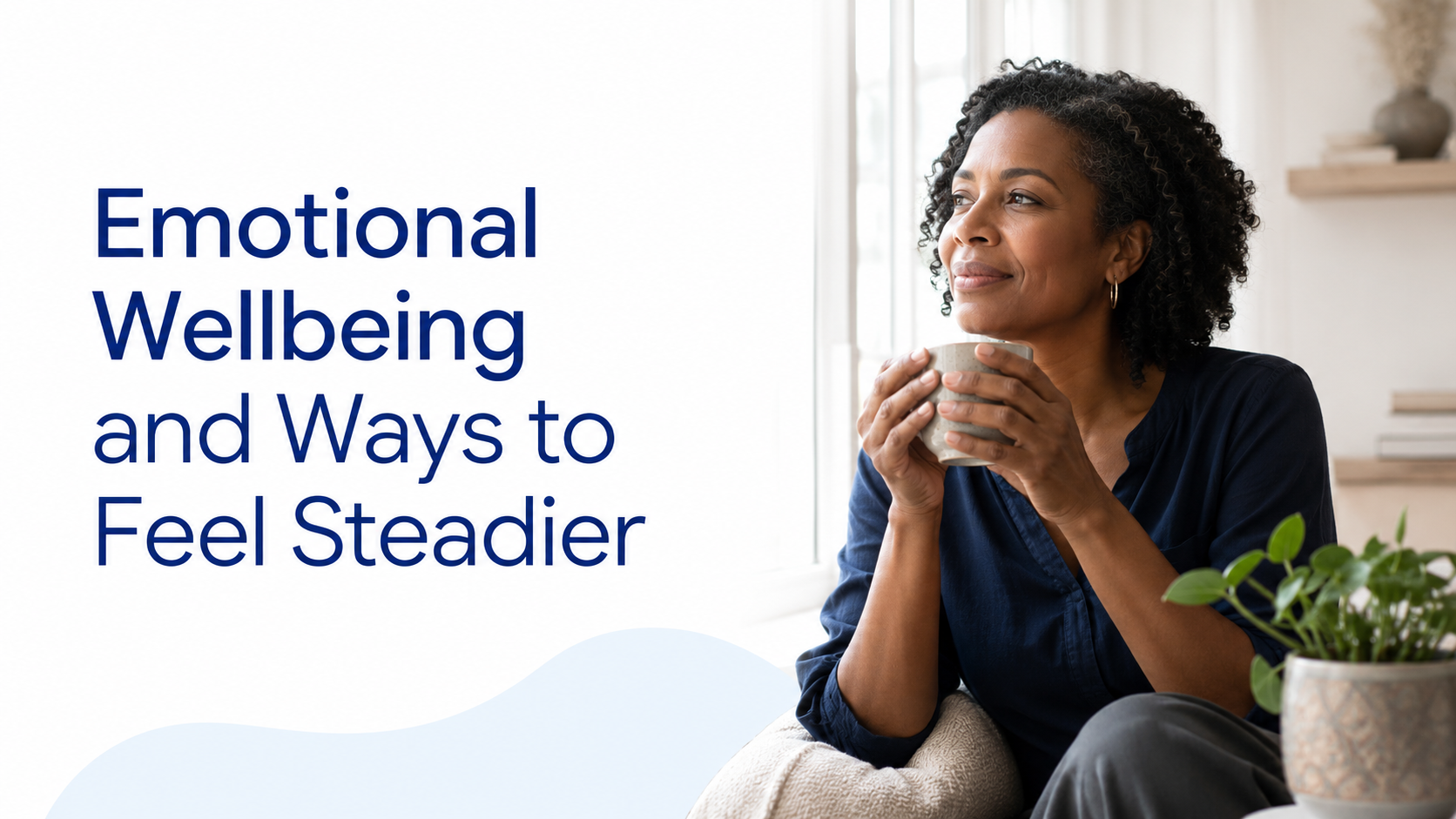
Emotional wellbeing is not about feeling calm or cheerful all the time. Discover practical, compassionate ways to understand your emotions, respond to stress, support your nervous system and create simple daily habits that help you feel steadier.
Some days, feeling overwhelmed is not a sign that you are failing. It may be a sign that your mind and body have been carrying too much for too long. Emotional wellbeing is not about being cheerful all the time or never having a difficult reaction. It is the capacity to notice what you feel, respond with care, recover after stress and remain connected to yourself and others.
For many people, emotional health becomes an afterthought when sleep is poor, responsibilities are mounting or a physical symptom needs attention. Yet our emotions affect how we eat, rest, communicate, make decisions and follow through with the habits that support long-term health. A whole-person approach makes room for every part of that picture.
What emotional wellbeing really looks like
Emotional wellbeing is often mistaken for constant calm. In reality, a person with strong emotional wellbeing can still feel grief, anger, worry or disappointment. The difference is not the absence of those feelings. It is having enough awareness, support and practical tools to move through them without becoming completely ruled by them.
It may look like recognising that irritation is showing up because you are exhausted, rather than taking it out on someone close to you. It can mean setting a boundary before resentment builds, allowing yourself to cry after a loss, or asking for help when your usual coping strategies are no longer enough.
This matters for wellness professionals as much as it does for individuals. When supporting clients, it is easy to focus only on food, supplements, routines or test results. Those tools can be valuable, but change is harder to sustain when a person feels unsafe, depleted or isolated. Emotional patterns, stress load and life circumstances deserve the same gentle curiosity as physical symptoms.
Begin by listening to your body’s signals
The body often speaks before the mind has found words. A tight jaw, shallow breathing, digestive discomfort, racing thoughts, a sudden urge to withdraw or difficulty sleeping can all be signals of stress. They are not proof that something is wrong with you. They are information.
A useful first step is to pause once or twice a day and ask: what am I noticing right now? Keep the question simple. You may notice tension in your shoulders, sadness beneath busyness or hunger that has been mistaken for anxiety. Naming an experience does not solve everything, but it creates a little space between the feeling and the reaction.
Try adding a second question: what would support me in the next ten minutes? The answer might be water, fresh air, a proper meal, a quiet moment, a short walk, a message to a friend or permission to postpone a non-urgent task. Small responses can be more realistic and more effective than waiting for the perfect self-care routine.
Make regulation practical, not performative
Nervous system support does not need to look impressive to work. Slow breathing, stretching, humming, prayer, journalling, sitting in daylight or placing both feet firmly on the floor can help you return to the present. The best practice is usually the one you will use when life feels busy.
It also depends on the person and the moment. A quiet meditation may feel restorative for one person but frustrating for another who is highly activated. Some people regulate through movement, others through stillness, music, creativity or conversation. Give yourself permission to experiment rather than forcing a method that does not fit.
Support emotional wellbeing through daily foundations
Emotions do not exist separately from the body. A difficult week may be made harder by irregular meals, dehydration, poor sleep, too much caffeine or very little time outdoors. These factors do not explain every emotional struggle, and they should never be used to dismiss someone’s experience. They can, however, lower your capacity to cope.
Start with nourishment. Regular meals containing protein, fibre-rich carbohydrates, colourful plants and healthy fats can help support steadier energy across the day. When blood sugar rises and falls sharply, some people notice more irritability, fatigue, shakiness or intense cravings. A nourishing breakfast or a prepared afternoon snack is not a cure for anxiety, but it can reduce one avoidable layer of strain.
Sleep deserves the same compassionate attention. Rather than aiming immediately for a perfect routine, choose one consistent anchor: a regular wake-up time, less screen stimulation before bed, a gentler evening light level or a few minutes to write down tomorrow’s tasks. If sleep problems are ongoing, severe or affecting daily functioning, speak with an appropriate healthcare professional.
Movement can also change the emotional tone of a day. This does not have to mean a demanding workout. A walk after lunch, gardening, mobility work, dancing in the kitchen or a few minutes of stretching can release some of the physical build-up of stress. The goal is not to earn rest. It is to help your body remember that it can move, breathe and recover.
Relationships are part of your health plan
Humans are not designed to carry everything alone. Supportive relationships can offer perspective, comfort and accountability when our thoughts become heavy. This does not require a large social circle. One honest conversation with a trusted person can make a meaningful difference.
Connection is most helpful when it feels safe. Consider who leaves you feeling more grounded rather than judged, rushed or drained. You might ask a friend for a regular walk, tell a partner what kind of support you need, or join a learning community where questions can be met with understanding. For practitioners, peer support is equally valuable. Holding space for others is demanding work, and it is healthier when it is not done in isolation.
Boundaries are part of connection too. Saying no to an extra commitment, limiting contact with a draining conversation or protecting time for rest is not selfish. It is a way of caring for the capacity you need to show up for the people and work that matter.
Create an emotional wellbeing practice you can keep
A sustainable practice is usually modest, personal and repeated often. Instead of attempting to transform your life in one weekend, choose a few anchors that suit your current season. You may decide to eat breakfast before checking messages, take a ten-minute walk after work and spend five minutes writing down what is on your mind before bed.
Track patterns with curiosity rather than judgement. Notice when your energy drops, what situations leave you tense, which foods or habits help you feel more settled, and where you feel most like yourself. Over time, these observations can reveal practical next steps. They can also help you have clearer conversations with a practitioner or healthcare provider.
At Venus Health Academy, a supportive global learning community can make this process feel less lonely. Education, shared experience and guided coaching can help turn good intentions into everyday choices, while respecting that each person’s health story is different.
Know when to seek additional support
Self-care practices are valuable, but they are not meant to replace professional care when more support is needed. If low mood, panic, trauma responses, grief, disordered eating, substance use or intrusive thoughts are affecting your safety or ability to function, reaching out to a qualified mental health professional is a strong and appropriate next step.
Urgent support is needed if you are at risk of harming yourself or someone else. Contact local emergency services or a crisis support service in your area, and tell someone you trust if you can. You deserve care that is timely, respectful and tailored to what you are experiencing.
Emotional wellbeing grows through small moments of attention: a meal that steadies you, a boundary that protects you, a breath before you respond and a conversation in which you do not have to pretend. Choose one small act of care today, then let that choice become evidence that your wellbeing is worth supporting.