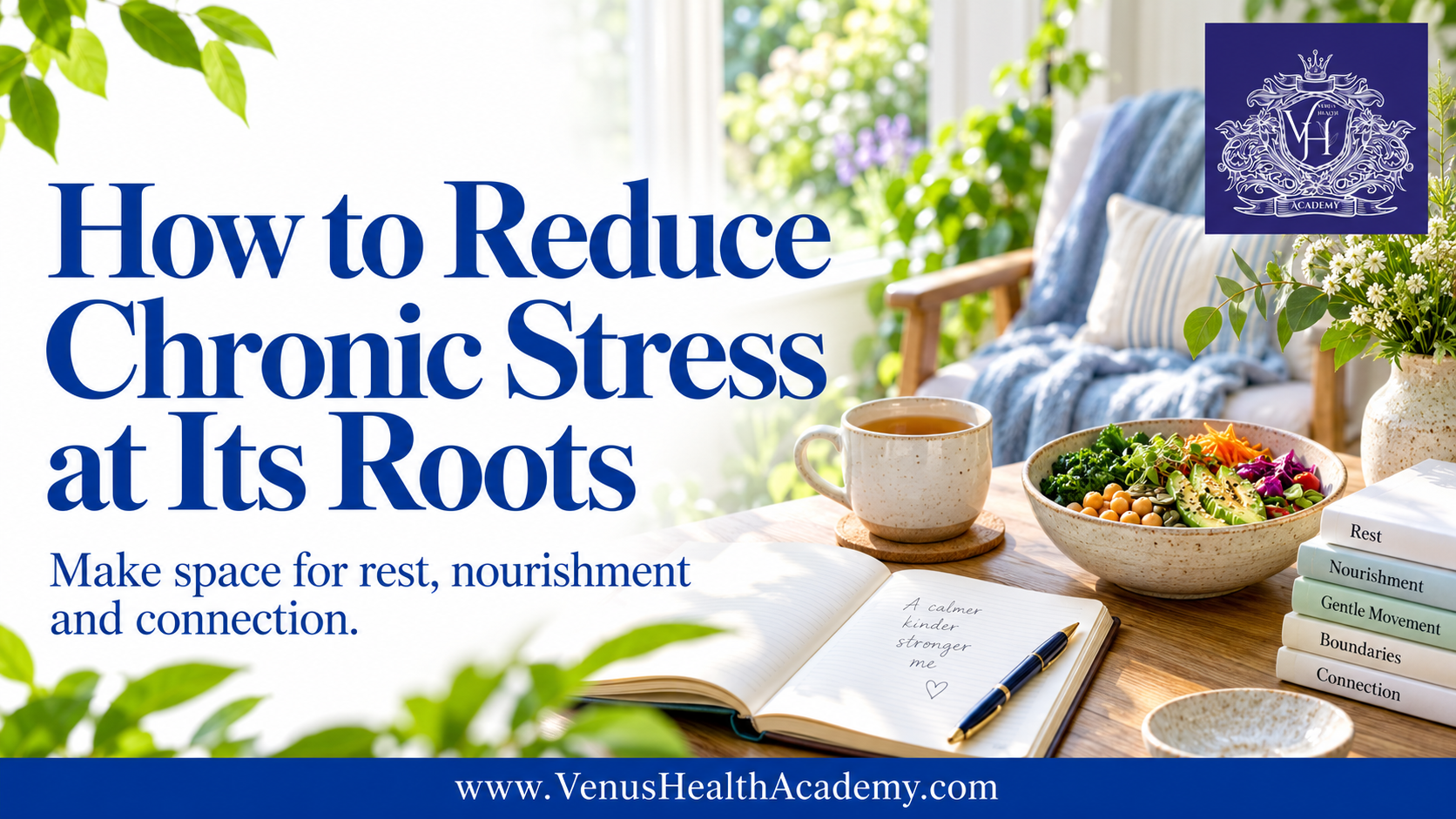
How to Reduce Chronic Stress at Its Roots
Chronic stress can build when everyday demands leave too little room for recovery. Discover how to recognise your personal stress patterns and support your wellbeing through restorative sleep, regular meals, gentle movement, clearer boundaries and meaningful connection. Begin with small, manageable changes that make daily life feel less demanding.
A busy diary is not always the problem. Chronic stress often shows up when your body has had too little opportunity to feel safe, rested and supported for too long. You may be keeping up with work, family and daily responsibilities while noticing poor sleep, digestive changes, racing thoughts, low mood, tension, fatigue or a shorter fuse than usual. To reduce chronic stress, it helps to look beyond one quick calming technique and consider the patterns shaping your whole week.
Stress is not a personal failure, and it is not something you should simply push through. It is a protective response. The goal is not to remove every demand from life, which is rarely possible. The aim is to give your nervous system more frequent, believable signals that the pressure has eased.
Why chronic stress needs a whole-person approach
A short period of stress can help us respond to a deadline, a difficult conversation or an unexpected problem. Chronic stress is different. It develops when those demands continue without enough recovery, predictability, nourishment, rest or emotional support.
For some people, the biggest driver is workload. For others, it may be caring responsibilities, financial uncertainty, persistent health symptoms, grief, relationship strain or years of feeling that they must manage everything alone. Your food choices, sleep timing, movement habits, medication, hormonal changes and environment can all influence how resilient you feel too.
That is why a root-cause approach is more useful than telling yourself to relax. A ten-minute meditation may be valuable, but it cannot fully offset a schedule that leaves no time to eat properly, an unresolved conflict or sleep that is repeatedly interrupted. Gentle practices work best when they are paired with practical changes to the conditions keeping your body on alert.
Start by noticing your personal stress pattern
Before changing your routine, become curious about when stress rises and what happens next. For one week, make a brief note of your energy, mood, meals, caffeine, sleep and moments when you feel rushed, overwhelmed or disconnected. You are not collecting evidence to criticise yourself. You are looking for patterns that can guide a kinder plan.
You might notice that anxiety peaks after skipping breakfast and relying on several coffees. You may find that evenings become tense after checking work messages late at night. Or perhaps you feel most depleted after several days without meaningful time outdoors or a proper conversation with someone you trust.
This information matters because the most effective support is personal. If you are a practitioner, this same process can help clients move from vague statements such as “I am stressed all the time” towards clear, manageable observations. Small details often point to the next helpful step.
Regulate before you try to solve everything
When you are overwhelmed, the brain naturally focuses on immediate threats. Complex decisions, planning and perspective can feel much harder. Begin with a short practice that helps your body shift out of high alert before tackling your to-do list.
Try sitting with both feet on the floor and taking a slightly longer exhale than inhale for two minutes. Look around the room slowly and name a few neutral things you can see: a window, a chair, a familiar mug. Place one hand on your chest or abdomen if that feels comforting. These are simple ways to orient to the present, rather than proof that you need to feel calm instantly.
Some people find breathing exercises frustrating or activating, particularly if they have experienced panic or trauma. If that is true for you, choose movement instead: walk slowly, stretch your shoulders, wash your hands in warm water or stand outside for fresh air. The best practice is the one your body can tolerate and repeat.
Support the foundations that make stress louder
Sleep, food and stimulation are not minor lifestyle details when you are trying to reduce chronic stress. They shape your capacity to meet daily demands.
Protect your sleep rhythm
Rather than chasing a perfect number of hours, create a more consistent rhythm. Aim to wake at a similar time most days, get daylight early when possible and build a short evening transition that tells your mind work is over. This could be a shower, gentle stretching, reading or preparing tomorrow’s breakfast.
If your thoughts race at night, keep a notebook nearby and write down practical tasks for the next day. The purpose is not to solve them at midnight. It is to reassure your brain that they have been recorded. Persistent insomnia, loud snoring, waking short of breath or extreme daytime exhaustion deserve a conversation with your GP or a qualified health professional.
Eat regularly enough to feel steady
Long gaps between meals can leave some people shaky, irritable or unable to concentrate, especially when coffee is filling the space where food should be. Build meals around protein, fibre-rich carbohydrates, colourful vegetables or fruit and nourishing fats. A simple lunch of soup with beans and wholegrain bread, or eggs with greens and potatoes, can be more supportive than trying to eat perfectly.
Caffeine is not automatically a problem, but timing and dose matter. If you notice jitters, afternoon crashes or poorer sleep, experiment with having it after breakfast, reducing the number of cups or switching one drink for a decaffeinated option. Make changes gradually, particularly if caffeine is part of your daily routine.
Choose movement that restores rather than depletes
Exercise can be a powerful stress outlet, but more is not always better. A demanding training session may feel energising for one person and exhausting for another who is already sleeping poorly and running on empty. Walking, gardening, mobility work, swimming or a gentle strength session can all support mood and body awareness.
Ask a useful question after movement: “Do I feel more settled, or more spent?” Let the answer guide your choice tomorrow. Consistency is more valuable than punishing yourself with a routine you cannot sustain.
Make your environment less demanding
Stress management is often framed as an individual task, yet many stressors are structural. You may not be able to leave a job immediately, change a difficult family situation or remove financial pressure. You can still reduce unnecessary friction around the edges.
Choose one boundary that protects your energy. It might be declining an extra commitment this month, taking your work notifications off your phone after a set time, asking a family member to share a task or scheduling an uninterrupted lunch break. A boundary does not need to be harsh to be real. “I cannot take that on this week” is a complete and respectful sentence.
Also consider sensory overload. Constant news alerts, background television, cluttered workspaces and too many open tabs can keep the mind in a state of low-level urgency. Create one quieter corner of your day, even if it is only ten minutes without input while you drink tea, walk or sit by an open window.
Build connection into your recovery plan
Many capable people try to manage chronic stress privately. Yet feeling understood is not a luxury. Safe connection can help the nervous system recognise that support is available.
This does not require a large social circle or a deep conversation every day. It may mean sending an honest message to a friend, attending a supportive group, sharing a meal without screens or asking your partner for a specific kind of help. For wellness professionals, peer supervision and community learning can be just as important as continuing education. Supporting others is meaningful work, but it should not leave you without support yourself.
At Venus Health Academy, guided learning and group coaching can offer a safe, empowering space to explore practical wellbeing tools alongside others who are making informed choices about their health.
Create a plan small enough to keep
A long list of healthy habits can become another source of pressure. Start with two anchors for the next seven days: one that supports your body and one that reduces demand. For example, eat breakfast before coffee and take a ten-minute walk after work. Or turn off notifications at 8 pm and prepare a simple protein-rich lunch the night before.
Review the plan with curiosity. If it did not happen, do not label yourself unmotivated. Ask what got in the way: was the step too large, was the timing unrealistic, or did you need more support? Adjusting the plan is part of the practice.
If chronic stress is affecting your ability to function, your relationships, your appetite, sleep or sense of safety, seek personalised support from a qualified healthcare professional. Urgent help is needed if you are having thoughts of harming yourself or feel unable to stay safe.
Your nervous system does not need a flawless routine to begin recovering. It needs repeated experiences of nourishment, rest, choice and connection. Start with one change that makes today feel a little less demanding, then let that small act become evidence that your wellbeing has a place in your life.