What a Root Cause Healing Approach Looks Like
Recurring symptoms can have many contributing factors. Discover how a compassionate root cause healing approach uses thoughtful observation, appropriate testing, nourishment, sleep, stress support and realistic lifestyle changes to help you understand your health patterns and build sustainable wellbeing—while recognising when professional medical care is needed.
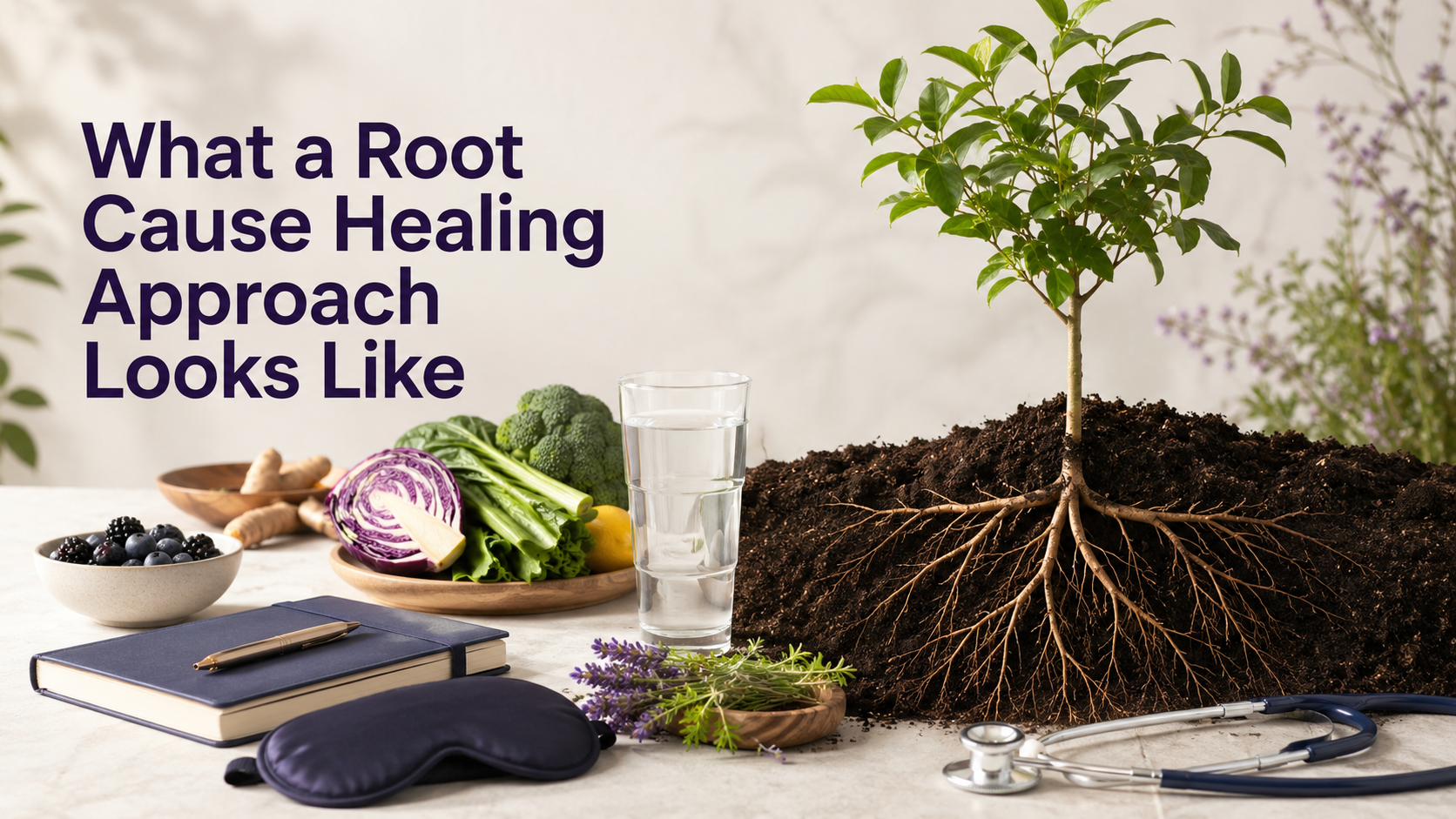
A symptom that keeps returning can feel like a message you cannot quite translate. Perhaps your energy drops every afternoon, digestion feels unpredictable, sleep is light, or stress shows up in your skin, appetite and mood. A root cause healing approach creates space to look beyond the immediate discomfort and ask a more useful question: what patterns, pressures and needs might be contributing to this?
This is not about blaming yourself for being unwell or assuming every health concern has one simple explanation. It is a practical, whole-person way of learning about your body, making informed choices and building habits that support long-term vitality. For some people, that starts with food and sleep. For others, it means addressing prolonged stress, reviewing medication with a clinician, interpreting test results in context, or recognising that a demanding routine leaves little room for recovery.
What does a root cause healing approach mean?
A root cause healing approach looks for the factors that may be driving, worsening or maintaining a health concern, rather than focusing only on reducing a symptom. Symptoms matter and deserve relief. They can also offer useful information about where further support, investigation or change may be needed.
For example, recurring bloating may be affected by meal pace, food intolerances, fibre intake, stress levels, gut health, hormonal shifts or an underlying medical condition. Persistent fatigue might relate to poor sleep quality, nutrient status, blood sugar patterns, burnout, medication effects, infection or another issue that needs clinical assessment. The point is not to guess. It is to investigate thoughtfully and avoid treating every concern as isolated.
Whole-person care considers how several areas of life interact: nourishment, movement, rest, emotional wellbeing, relationships, environment, health history and access to support. This perspective can be particularly valuable when a person has tried several quick fixes but still does not feel well.
Begin with curiosity, not a rigid protocol
The most effective starting point is an honest picture of what is happening now. Before adding supplements, eliminating foods or committing to a complicated routine, notice the patterns around your symptoms. When do they occur? What makes them better or worse? What changed before they began? How are you sleeping, eating, moving and coping emotionally?
A simple two-week record can reveal more than memory alone. Note meals, symptoms, stress, sleep, bowel habits, energy, cycle changes where relevant, and any new products or medications. This is not a reason to monitor every mouthful or become anxious about health data. It is a short period of observation designed to give you and your practitioner clearer information.
It also helps to consider the basics that are easily overlooked when life is busy. Regular meals containing protein, fibre and nourishing fats may support steadier energy. Daylight and a consistent wind-down routine can improve sleep cues. Gentle movement may help mood, digestion and circulation. None of these foundations is glamorous, but they often create the capacity for deeper healing work.
Use testing as a tool, not a verdict
Test results can be useful, especially when they are interpreted alongside symptoms, history and lifestyle. A number on a report does not tell the whole story. Equally, a normal result does not mean a person’s experience is unimportant.
A qualified clinician can help determine which conventional tests or further assessments are appropriate and can identify red flags that need timely medical care. Practitioners working in integrative wellbeing can support lifestyle education, food strategies and the practical follow-through that often gets lost after an appointment. The strongest care is collaborative, with each professional working within their expertise.
Be cautious of expensive testing panels presented as a guaranteed answer to every persistent symptom. A useful test should have a clear reason behind it and lead to a sensible next step. Ask what the result can and cannot show, whether it is clinically reliable, and how it would change your plan. Trusted natural health knowledge includes knowing when more information is helpful and when it may only create confusion.
Make changes that your real life can hold
A root cause healing approach is often misunderstood as an intense overhaul. In practice, lasting progress usually comes from a small number of well-chosen changes repeated consistently. A plan that looks ideal on paper but makes family life, work or finances harder is unlikely to last.
Choose one priority based on the pattern you have observed. If you are skipping breakfast and crashing mid-morning, start by creating two or three realistic breakfast options. If racing thoughts keep you awake, protect a 20-minute evening transition before trying a long list of sleep products. If digestive symptoms flare when meals are rushed, begin with sitting down and taking a few slow breaths before eating.
Then review rather than constantly changing direction. Give a manageable adjustment enough time to notice its effect, unless it makes you feel worse. This approach is especially important for practitioners supporting clients. Clear education, realistic actions and regular check-ins are often more valuable than handing over a restrictive protocol without context.
Address emotional wellbeing as part of physical health
The body does not separate a full inbox, caregiving pressure, grief, poor sleep and inconsistent meals into neat compartments. Long-term stress can influence digestion, appetite, energy, immune function and the ability to maintain healthy routines. This does not mean symptoms are ‘all in your head’. It means your emotional experience and physical health are connected.
Support may involve boundaries, counselling, restorative movement, time outdoors, breathwork, better rest, or asking for practical help. The right option depends on the person. If emotional distress feels overwhelming, persistent or unsafe, professional mental health support is an essential part of care.
A compassionate approach replaces the question, ‘Why can’t I stick to this?’ with, ‘What support would make this possible?’ That shift can reduce shame and make change feel more achievable.
Know when to seek medical help
Natural and lifestyle-based strategies can sit alongside conventional healthcare, but they are not a substitute for diagnosis or urgent treatment. Seek prompt medical advice for new, severe or worsening symptoms, including chest pain, difficulty breathing, fainting, sudden weakness, significant unexplained weight change, bleeding, persistent vomiting, high fever or changes in mental health that affect your safety.
It is also wise to speak with a qualified healthcare professional before changing prescribed medication, taking high-dose supplements, or beginning a restrictive diet, particularly during pregnancy, while breastfeeding, or when managing a diagnosed condition. Good root-cause work respects both the value and the limits of self-directed wellbeing.
Build support around the process
Health changes are easier to sustain when you do not have to piece everything together alone. A supportive global learning community can provide structure, accountability and reassurance without judgement. At Venus Health Academy, members can turn learning into action through practical tools such as guided education, food and recipe resources, health protocols, group coaching and personalised consultation support.
For professionals, shared learning also strengthens the way you support clients. You can communicate complex health ideas more clearly, recognise when referral is needed and offer lifestyle guidance that feels realistic rather than prescriptive. For individuals, being able to ask questions and revisit trusted resources can make the process feel less overwhelming.
Healing rarely follows a straight line. Your needs may change with seasons, stress, life stages and new information. Stay curious, keep the next step small enough to practise, and let each observation bring you closer to a way of caring for your health that is informed, compassionate and built to last.