
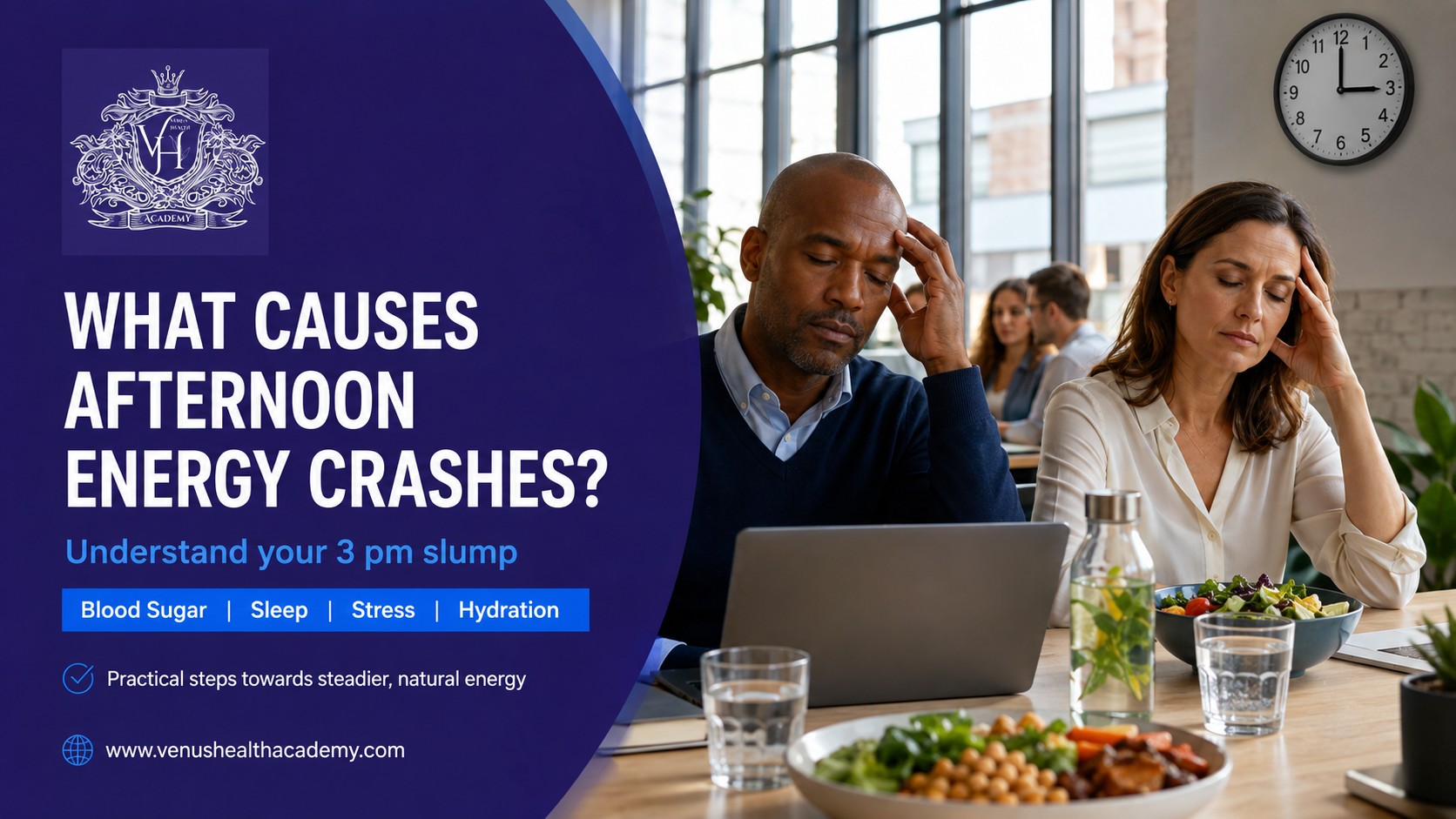
Struggling with the 3 pm slump? Afternoon energy crashes can be linked to what you eat, how you sleep, stress, dehydration and underlying health concerns. Discover the most common causes and practical, holistic strategies to support steadier energy throughout the day.
At 3 pm, another coffee can feel like the only way to finish the day. Yet when this pattern repeats, it is worth asking what causes afternoon energy crashes rather than simply pushing through them. A daily slump is not always a sign that you need more willpower. It can be useful feedback from your body about food, sleep, stress, movement, hydration or an underlying health concern.
For some people, a gentle dip in alertness after lunch is part of normal circadian rhythm. For others, the crash is more dramatic: fuzzy thinking, cravings, irritability, heavy eyelids or a sudden need to lie down. The difference matters. Holistic health starts by noticing patterns, then making informed choices that support the whole person rather than treating each symptom in isolation.
What causes afternoon energy crashes?
Afternoon fatigue rarely has one single cause. It often develops from several small pressures that build from the moment you wake up. A rushed morning, a sweet breakfast, back-to-back meetings, too little water and a carb-heavy lunch can all land at the same time.
Blood sugar rises and falls
One of the most common drivers is a meal or snack that raises blood sugar quickly and then leaves it dropping sharply. Sugary cereals, pastries, white toast, sweetened drinks and a lunch built mainly around refined carbohydrates may provide fast energy, but they may not sustain it. When there is little protein, fibre or healthy fat alongside them, hunger and tiredness can return sooner.
This is not an argument for fearing carbohydrates. Whole-food carbohydrates such as beans, lentils, oats, vegetables, fruit and whole grains can be valuable sources of fibre and nourishment. The question is balance and individual response. A jacket potato with tuna, olive oil and salad will usually support steadier energy than a large serving of chips or a sandwich with little filling.
Notice, too, the pattern of skipping breakfast and then eating a very large lunch. Some people feel well with a later first meal; others become ravenous, overeat at lunchtime and experience a pronounced slump afterwards. Your body’s response is more useful than a rigid rule.
Sleep debt catches up with you
The afternoon often exposes the sleep you did not get the night before. Even when you have been in bed for seven or eight hours, disrupted sleep, late-night scrolling, alcohol, a changing schedule or untreated snoring can reduce sleep quality. Caffeine may mask the problem in the morning, then lose its effect when your natural alertness dips after lunch.
Sleep is also connected to appetite and food choices. When you are overtired, quick-energy foods can become more tempting, making the blood-sugar rollercoaster more likely. Supporting energy therefore means looking at the previous evening as well as your lunch plate.
Stress uses more energy than we realise
A busy day does not have to look outwardly dramatic to be draining. Constant notifications, emotionally demanding work, caregiving, financial worry and never taking a true pause can keep the nervous system on high alert. Some people feel wired in the morning and depleted later, particularly when they have been running on adrenaline.
Stress can also change how we eat. Lunch becomes something grabbed at a desk, chewed quickly between calls, or missed altogether. A brief, screen-free meal and a few slow breaths before eating may sound simple, but they can help create a more settled rhythm around food and digestion.
Dehydration, inactivity and indoor days
Mild dehydration can contribute to headaches, poor concentration and tiredness. It is easy to underestimate fluid needs when the day is cool, sedentary or fuelled by coffee. While tea and coffee contribute fluid, several caffeinated drinks may leave some people jittery, disrupt sleep or lead to a later rebound in energy.
Sitting for hours can add to the feeling of heaviness. A ten-minute walk outside after lunch offers movement, daylight and a mental reset. It will not solve every crash, but it is a practical experiment with very little downside. If walking is not accessible, gentle stretching, a few flights of stairs or standing by a window can still interrupt the sedentary spell.
The less obvious reasons your energy may dip
Persistent afternoon exhaustion can also be linked with factors that deserve a closer look. Iron deficiency, thyroid concerns, blood-sugar dysregulation, low vitamin B12 or vitamin D, medication side effects, perimenopause, depression, anxiety and sleep disorders can all affect energy. Long COVID and other ongoing health conditions may also change how much energy your body has available.
This is where a root-cause approach is especially valuable. It avoids assuming every energy crash is a nutrition problem, while still giving you meaningful daily actions. If fatigue is new, worsening or affecting your ability to function, speak with a qualified healthcare professional. Testing and personalised guidance can help identify what is actually going on rather than relying on guesswork.
Seek prompt medical advice for fatigue accompanied by chest pain, shortness of breath, fainting, unexplained weight loss, black stools, persistent fever or severe weakness. Natural health education can sit alongside appropriate medical care; it should not delay it.
A practical two-week energy audit
Rather than changing everything at once, gather useful information for two weeks. Record when the dip arrives, what you ate and drank beforehand, your sleep duration and quality, caffeine timing, stress level, movement and any symptoms such as cravings, headaches or dizziness. This is not about judging yourself. It is about making your patterns visible.
Then choose one or two changes and observe the effect. Start with the changes most likely to suit your life rather than copying a perfect routine that will not last. A sustainable approach could include:
Building breakfast or lunch around protein, fibre and colour, such as eggs with vegetables, Greek yoghurt with berries and seeds, or lentil soup with a whole-grain side.
Drinking water regularly through the morning, and having a glass before lunch rather than waiting until thirst is intense.
Taking a ten-minute outdoor walk or gentle movement break after eating.
Setting a personal caffeine cut-off early enough to protect the night’s sleep, especially if you are sensitive to it.
For many people, the lunch plate is the easiest place to begin. Aim for a clear protein source, plenty of non-starchy vegetables, a satisfying fat and a carbohydrate portion that works for your body and activity level. This is not about making meals restrictive. It is about giving your body ingredients for longer-lasting energy.
A snack can help if there is a long gap between meals, but choose one that is more than a quick sugar hit. An apple with nut butter, yoghurt with seeds, hummus with vegetables or a handful of nuts and fruit offers more staying power than biscuits alone. If you regularly need snacks just to feel functional, include that observation in your health conversation rather than assuming it is normal.
Create an afternoon rhythm, not a rescue plan
The goal is not to eliminate every natural dip in energy or to be productive every minute. Human energy changes across the day. The aim is to replace the cycle of crash, caffeine and craving with a rhythm that respects your physiology.
Consider protecting the first 20 minutes after lunch where possible. Step away from your workstation, eat more slowly and allow a short reset before returning to demanding tasks. If your diary allows, schedule detail-focused work for your more alert morning hours and reserve lower-intensity admin tasks for the part of the afternoon when your concentration naturally softens.
Practitioners can use the same compassionate curiosity with clients. Ask about meals, sleep, stress, medication, menstrual cycle changes and the pace of the working day before recommending supplements or protocols. A symptom may be common, but it is still personal. The most helpful support is practical, safe and shaped around the person’s real life.
Venus Health Academy believes trusted natural health knowledge is most powerful when it helps people feel capable, not overwhelmed. Your afternoon crash is not a personal failure. Treat it as a useful signal, meet it with care, and let small, consistent experiments guide you towards steadier energy and long-term vitality.