
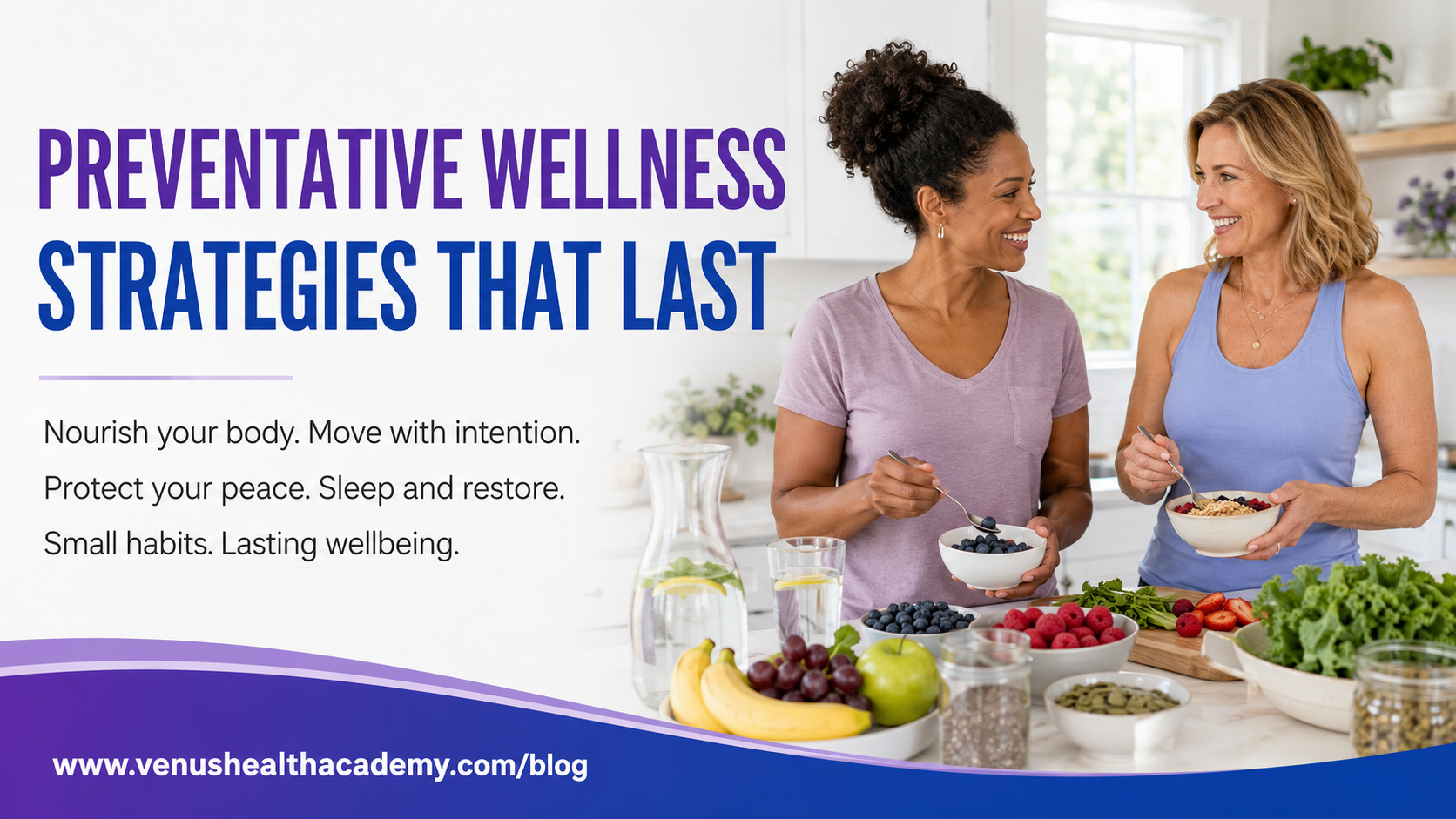
Preventative wellness does not require perfection or a complicated routine. Discover how small, sustainable changes to nutrition, sleep, movement and stress management can strengthen your health foundations and support lasting wellbeing.
A wellness routine should not feel like another full-time job. The most effective preventative wellness strategies are usually the ones that fit real life: the breakfast you can prepare on a busy morning, the boundary you can hold after work, and the small habit you can repeat even when motivation is low. Prevention is not about chasing perfection or waiting for a health scare to make changes. It is about learning to notice what your body needs, then responding with practical, informed care.
For many people, this begins with a shift away from reactive decisions. Rather than only looking for answers when energy drops, sleep changes or digestion becomes uncomfortable, preventative care asks a gentler question: what foundations can I strengthen now? The answer will differ from person to person, but the principles are remarkably consistent.
Start with your personal baseline
Before adding supplements, eliminating foods or following a detailed protocol, take stock of where you are. Your baseline is not a judgement. It is useful information that helps you make choices based on your own patterns rather than someone else’s wellness routine.
For one or two weeks, observe your energy, sleep, mood, digestion, appetite, movement and stress levels. Notice when you feel most clear-headed and when you tend to crash. Pay attention to patterns around meals, alcohol, caffeine, late-night scrolling, work pressure and social commitments. A simple notebook can be more revealing than an elaborate tracking app if you use it consistently.
This process can also help wellness professionals support clients with greater care. Instead of giving generic advice, you can identify the routines and pressures that shape a person’s day. If symptoms are persistent, severe, new or worsening, speak with a qualified healthcare professional. A holistic approach should complement appropriate medical assessment, not delay it.
Make food a steady source of support
Nutrition is often presented as a set of strict rules. In practice, preventative eating is more useful when it creates steadier energy, nourishment and enjoyment. Start by building meals around whole, recognisable foods: colourful vegetables and fruit, quality protein, fibre-rich carbohydrates and nourishing fats.
Regular meals can be particularly supportive for people who skip breakfast, rely on caffeine to get through the morning, then feel ravenous later in the day. A breakfast with protein and fibre, such as eggs with vegetables or yoghurt with berries, seeds and oats, may feel more sustaining than a pastry eaten on the move. The best choice depends on your preferences, culture, budget and health needs.
Rather than trying to change every meal at once, choose one reliable upgrade. Add vegetables to your evening meal. Keep a simple protein option available for lunch. Prepare a few ingredients ahead of a demanding week. Small preparation reduces the number of decisions you need to make when you are tired.
It is also worth making room for pleasure. A preventative approach is not made stronger by fear around food. It becomes more sustainable when nourishing choices form the foundation, while meals with family, favourite foods and special occasions still have a place.
Treat sleep as a daily health practice
Sleep is one of the clearest examples of prevention that happens quietly. It supports emotional regulation, concentration, immune function, appetite cues and recovery. Yet it is often the first thing sacrificed when life becomes full.
A consistent wake-up time is often more achievable than trying to force an early bedtime. From there, create a short wind-down cue that tells your nervous system the day is ending. This may be dimming lights, putting your mobile phone outside the bedroom, having a shower, reading a few pages or writing down tomorrow’s tasks so they are not circling in your mind.
If you wake often, snore loudly, struggle with extreme daytime tiredness or have ongoing sleep concerns, seek professional guidance. Sleep challenges can have many causes, and self-help habits are not always the whole answer.
Build movement into the life you already have
Movement is preventative care, but it does not need to mean punishing workouts or an all-or-nothing gym plan. Walking, strength training, stretching, dancing, gardening and cycling can all contribute to a more capable, mobile body. The goal is to find forms of movement that support you rather than deplete you.
Strength work deserves particular attention as we age because it supports muscles, bones, balance and independence. This does not require complicated equipment. Bodyweight exercises, resistance bands or guided sessions can be a sensible starting point, especially when technique and gradual progression come first.
The trade-off is recovery. More exercise is not automatically better when sleep is poor, stress is high or you are returning after illness. On those days, a gentle walk and a few mobility movements may be the more intelligent choice. Listening to your body is not giving up. It is part of building a practice you can maintain.
Protect your nervous system, not just your schedule
Stress is not always avoidable. Caring responsibilities, deadlines, finances and uncertainty are real. Preventative wellness does not ask you to become calm at all times. It gives you tools to help your body return to a steadier state after stress.
Begin by identifying the moments when you are most likely to override your own needs. Perhaps you work through lunch, answer messages late into the evening or agree to plans when you need rest. One small boundary can have a meaningful effect: a screen-free meal, a ten-minute walk between meetings, or a clear finish time for work.
Emotional wellbeing also grows through connection. A trusted conversation, a supportive group or a regular check-in with someone who understands your goals can reduce the isolation that often makes healthy habits harder to sustain. Community is not an optional extra. For many people, it is the accountability and encouragement that turns information into action.
Use preventative wellness strategies with discernment
The wellness space can make every new supplement, wearable or protocol sound essential. Some tools can be useful, but they work best when they serve a clear purpose. Ask what problem you are trying to solve, what evidence or guidance supports the approach, and whether it is realistic for your routine and budget.
Supplements, for example, are not a replacement for food, sleep or stress support. They may be appropriate in some circumstances, particularly where a practitioner has considered symptoms, diet, medications, health history and test results. More is not necessarily better, and natural products can still interact with medicines or be unsuitable for certain people.
For deeper or persistent concerns, personalised support can bring clarity. Learning how to understand your health history, ask better questions and review relevant test results with an appropriately qualified practitioner can help you move away from guesswork. This is where structured education, practical resources and experienced guidance are especially valuable.
Choose one foundation and practise it
A long list of intentions can create pressure. A single well-chosen habit creates evidence that you can care for yourself consistently. Choose the area that would make the greatest difference to your current life, whether that is eating a more balanced breakfast, taking a daily walk, creating a bedtime routine or pausing before you say yes to another commitment.
Make it specific enough to do this week. Instead of promising to “eat better”, decide that you will include a source of protein with breakfast on four mornings. Instead of “managing stress”, decide that you will spend five quiet minutes outdoors after lunch. Review what helped and what got in the way without criticism, then adapt.
At Venus Health Academy, we believe trusted natural health knowledge is most powerful when it helps people make informed choices with confidence. Long-term vitality is rarely built through one dramatic change. It is built when you learn your body’s signals, gather the right support and return to the small practices that help you feel well in your everyday life.